
Arizona offers some of the most striking natural landscapes and unique attractions in the United States. The state features everything from deep canyons and red rock formations to desert gardens and historic towns.
Whether you love outdoor adventures or want to learn about local culture, Arizona has options for every type of traveler.
This guide covers 10 Best Places to Visit in Arizona that showcase the best of what Arizona has to offer, from world-famous national parks to hidden desert gems.
You’ll find information about natural wonders, scenic areas, and cultural sites across the state. Each location provides a different experience, so you can plan a trip that matches your interests and schedule.
1) Grand Canyon National Park (South Rim)
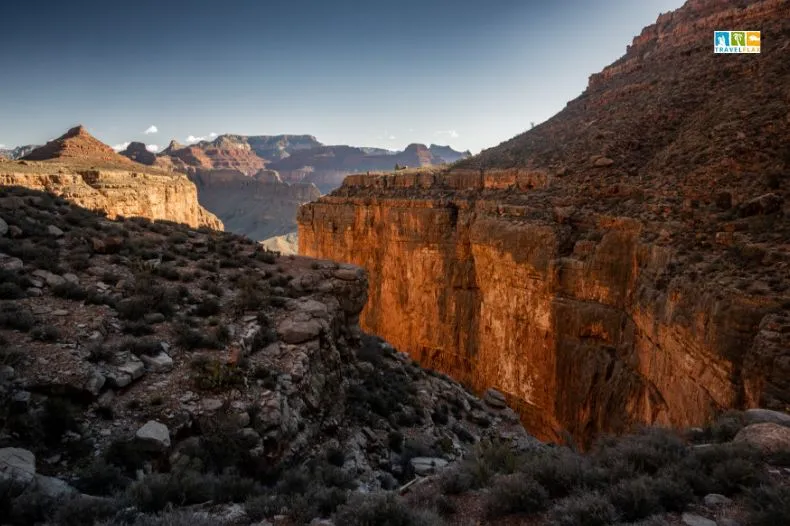
The South Rim offers the most accessible and popular way to experience the Grand Canyon. Located in northern Arizona about 100 kilometers north of Flagstaff, this section of the park stays open year-round and provides multiple viewpoints along its edge.
You can walk along the Rim Trail to see different perspectives of the canyon. Popular viewpoints include Mather Point, Yavapai Point, and Desert View. Each spot gives you a different angle of the layered rock formations below.
Desert View Drive is the only scenic road open to private vehicles throughout the year. You can stop at various pullouts and viewpoints as you drive along this route.
The South Rim has hiking trails for different skill levels. You’ll find everything from easy rim walks to challenging trails that descend into the canyon. The area also has visitor centers where you can learn about the park’s geology and history.
Plan to spend at least a full day here to see the main attractions. The South Rim has lodging, dining options, and ranger-led programs if you want to extend your visit.
2) Antelope Canyon (Upper) — Page
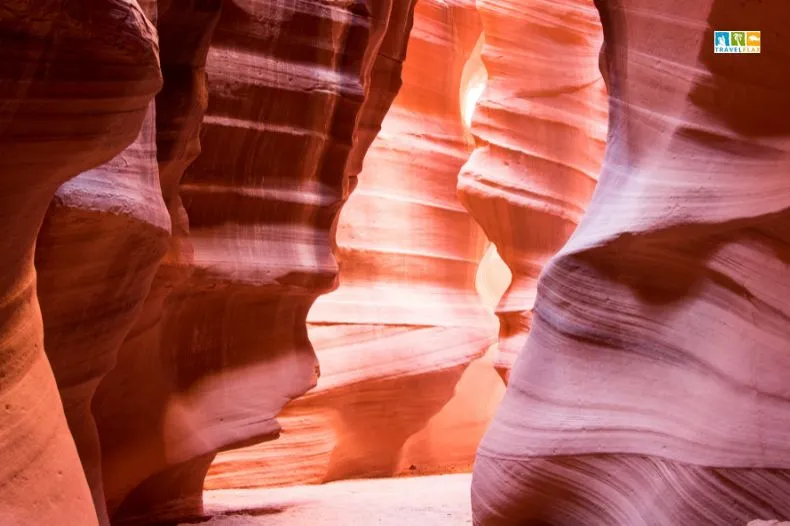
Upper Antelope Canyon stands as one of Arizona’s most photographed natural landmarks. Located near Page, this slot canyon features smooth, wave-like sandstone walls that have formed over millions of years through water and wind erosion.
You’ll need to book a guided tour to enter the canyon, as it sits on Navajo Nation land. Tours typically last around two hours, including the walk to and from the canyon entrance.
The canyon is famous for its light beams that shine down through narrow openings above. These beams appear best during the midday hours between late March and early October.
The walking path through Upper Antelope is relatively flat and easier to navigate compared to the lower canyon, making it accessible for most visitors.
Your tour guide will lead you through the narrow passages where the canyon walls tower above you. The rust-colored sandstone creates stunning patterns and textures throughout the canyon.
Page is located in northern Arizona, approximately four and a half hours from Phoenix. You should book your tour in advance, especially during peak tourist seasons, as slots fill up quickly.
3) Havasu Falls — Havasupai Reservation
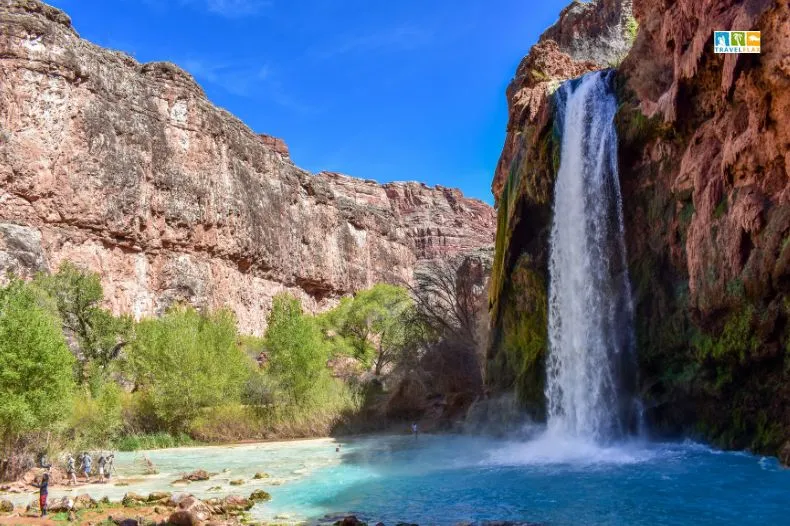
Havasu Falls sits within the Havasupai Indian Reservation, surrounded by the Grand Canyon. The striking blue-green water and red rock cliffs make this one of Arizona’s most photographed locations.
You’ll need to plan ahead for this trip. All visits require a permit and at least a one-night stay, either at the campground or Havasupai Lodge in Supai Village. The tribe limits daily permits to protect the natural resources.
The hike to Havasu Falls is 10 miles each way from the trailhead. You’ll need to pack in all your gear and supplies through the desert environment. Most visitors treat this as a backpacking trip and stay at the campground near the falls.
The Havasupai village is isolated and accessible only by this long hike or by helicopter. Five waterfalls exist in this area, with Havasu Falls being the most famous. The campground stretches about a mile along both sides of Havasu Creek.
You should prepare properly for the desert conditions and distance. The total roundtrip hike is approximately 20 miles when you include the extra distance to the campground.
4) Sedona Red Rock Scenic Area
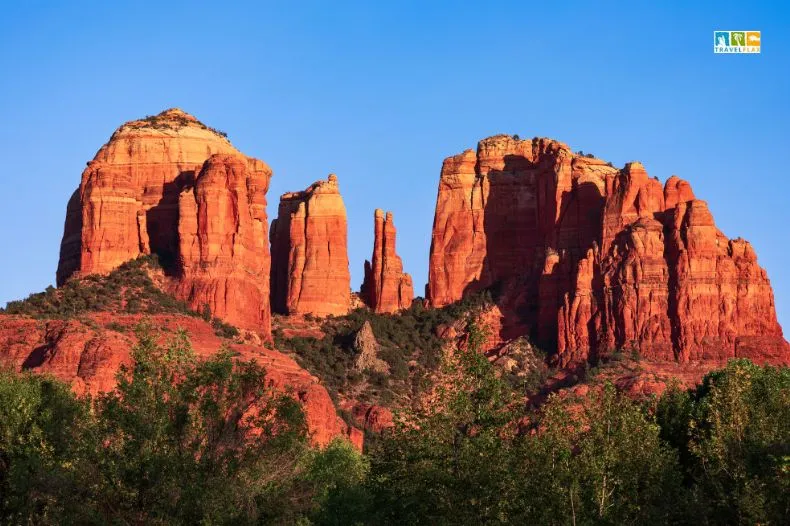
Sedona’s red rock formations create one of Arizona’s most striking landscapes. The tall sandstone formations glow in shades of orange and red, especially during sunrise and sunset.
You can explore this area through several well-marked hiking trails. Cathedral Rock and Bell Rock are two popular spots that offer great views without being too difficult. The trails range from easy walks to more challenging climbs.
The scenic drives around Sedona let you see the red rocks from your car. Red Rock Scenic Byway takes you through the main area and provides many pullouts where you can stop for photos.
Airport Mesa is a top spot to watch the sunset. You get 360-degree views of the surrounding red rock formations. Plan to arrive 30 to 45 minutes early to find parking and a good viewing spot.
The area also features art galleries and shops in the small town center. You can visit the Chapel of the Holy Cross, a modern church built into the red rocks. Many visitors come to experience the natural beauty and peaceful setting that makes Sedona unique.
5) Monument Valley Navajo Tribal Park
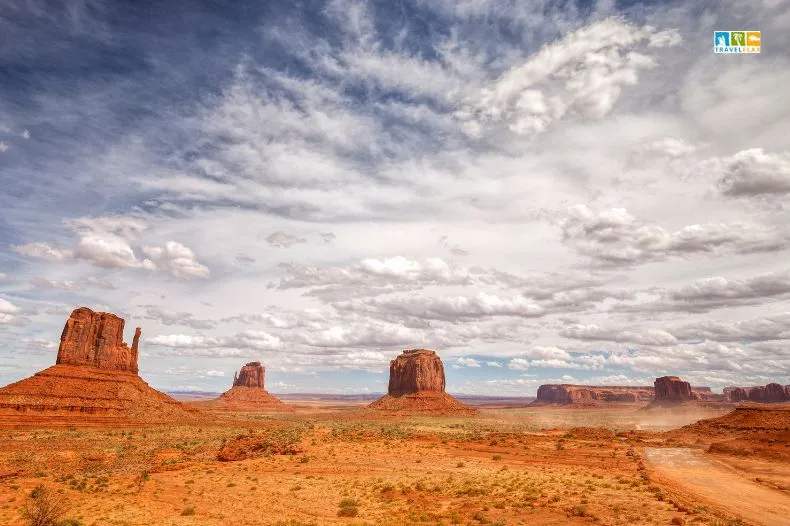
Monument Valley sits on the Utah-Arizona border within the Navajo Nation Reservation. The park features massive red rock formations that rise from the desert floor, creating one of the most recognizable landscapes in the American Southwest.
You can explore the area by driving the 17-mile dirt and sand scenic route through the park. The road takes you past famous formations and offers several places to stop for photos.
The drive works best in the early morning or late afternoon when the light brings out the red colors in the rocks.
The park charges an entrance fee and operates as a Navajo Tribal Park rather than a National Park. You have the option to drive yourself or hire a Navajo guide who can take you to restricted areas not open to the general public.
The Wildcat Trail offers a 3.2-mile hiking loop around West Mitten Butte if you want to stretch your legs. The visitor center provides information about Navajo culture and the area’s geology when you arrive.
6) Saguaro National Park (Tucson)
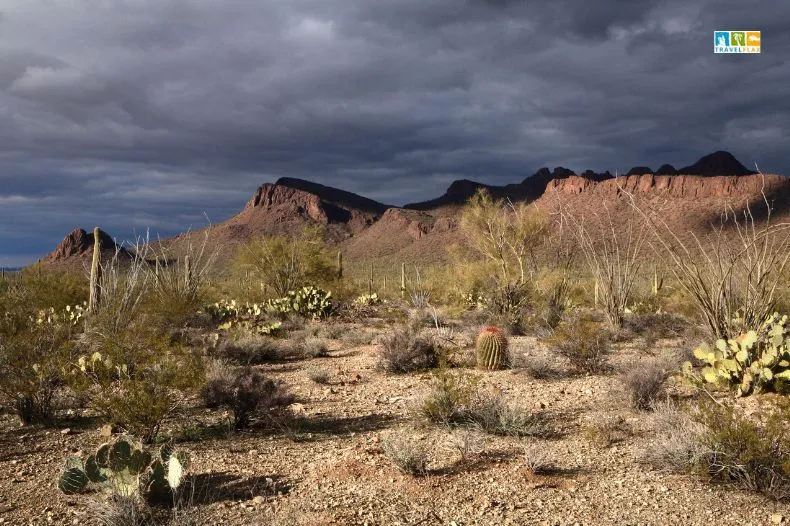
Saguaro National Park protects thousands of giant saguaro cacti that only grow in the Sonoran Desert. The park splits into two districts on either side of Tucson, giving you different landscapes to explore.
You can drive scenic loops through both sections to see the towering cacti up close. The west district features older, denser forests of saguaros, while the east district sits at higher elevations with mountain views.
Short walking trails let you wander among the cacti without much effort. If you want more activity, longer hiking trails take you deeper into the desert landscape. You might spot wildlife like roadrunners, coyotes, and various desert birds during your visit.
The park works well as a half-day trip from Tucson. You can see the main attractions in a few hours by driving the loops and taking a short walk or two.
Photography opportunities are excellent, especially during sunrise and sunset when the light hits the cacti just right.
Plan to bring plenty of water since the desert heat can be intense, particularly in summer months. The park stays open year-round, but spring offers the most comfortable temperatures for outdoor activities.
7) Petrified Forest National Park
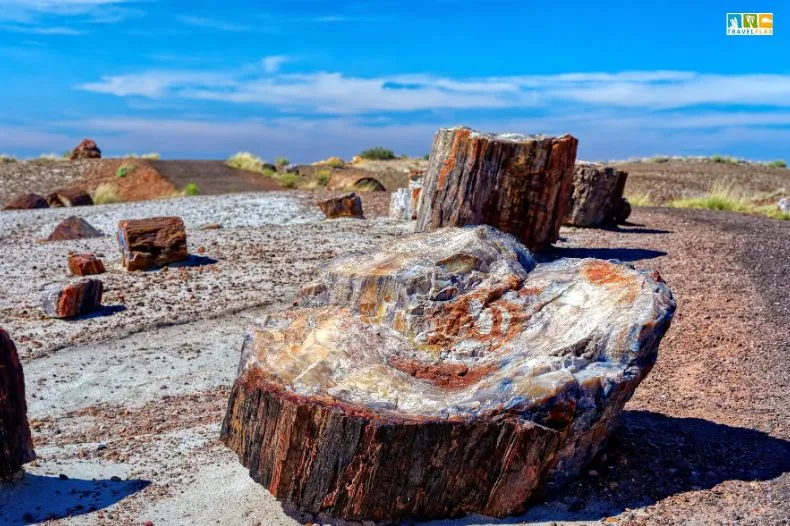
Petrified Forest National Park offers a unique look at ancient history in northeastern Arizona. The park holds the world’s largest collection of petrified wood, with fossilized trees that turned to stone over 200 million years ago.
You can drive the main scenic road through the park in about an hour. This route takes you past colorful badlands and several short trails. The Crystal Forest Trail is a popular stop where you’ll see petrified logs that sparkle with quartz crystals.
The Painted Desert section features layered rock formations in shades of red, orange, and purple. You can view these from overlooks along the northern part of the park. The Blue Mesa Trail offers a closer look at the striped badlands.
The park also has ancient petroglyphs and historic Route 66 sites. Most visitors spend between three to six hours exploring the main attractions. The entrance fee is valid for seven days.
Plan to bring water and sun protection since the desert climate gets hot. The park sits at a high elevation, so temperatures can drop quickly in the morning and evening.
8) Flagstaff & San Francisco Peaks
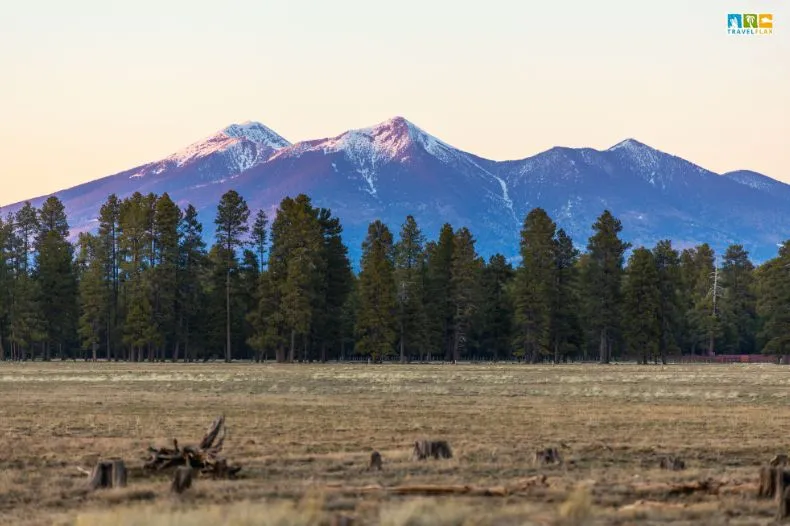
Flagstaff sits at 7,000 feet in elevation and offers a refreshing contrast to Arizona’s desert landscapes. You’ll find pine forests, cooler temperatures, and a charming downtown area that makes it feel more like a mountain town than typical Arizona.
The San Francisco Peaks dominate the skyline just north of the city. Humphreys Peak, the tallest mountain in Arizona at 12,633 feet, provides challenging hiking trails with incredible views. On clear days, you can see the Grand Canyon from the summit.
Flagstaff serves as an ideal base for exploring northern Arizona. You’re within easy reach of the Grand Canyon, Sedona’s red rocks, and several national monuments. The city sits along historic Route 66 and Interstate 40, making it a convenient stop during road trips.
Visit in fall to see golden aspen trees covering the mountain slopes. Winter brings snow and skiing opportunities at Arizona Snowbowl. The surrounding Coconino National Forest offers year-round outdoor activities including hiking, mountain biking, and camping.
The city also features Northern Arizona University, which adds cultural attractions and dining options to the area.
9) Tombstone Historic District
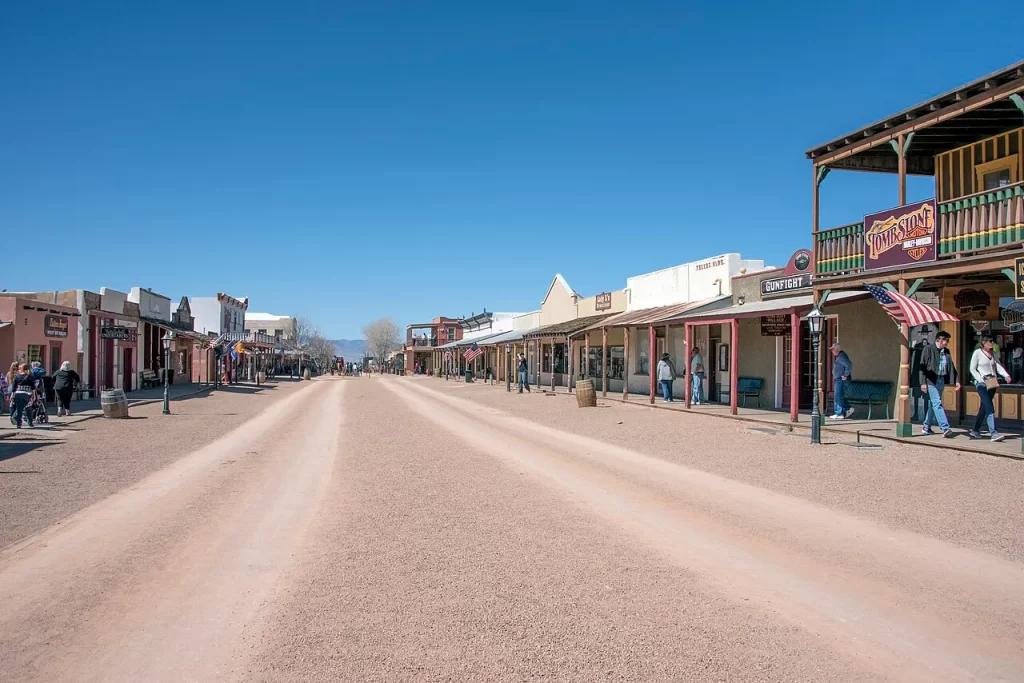
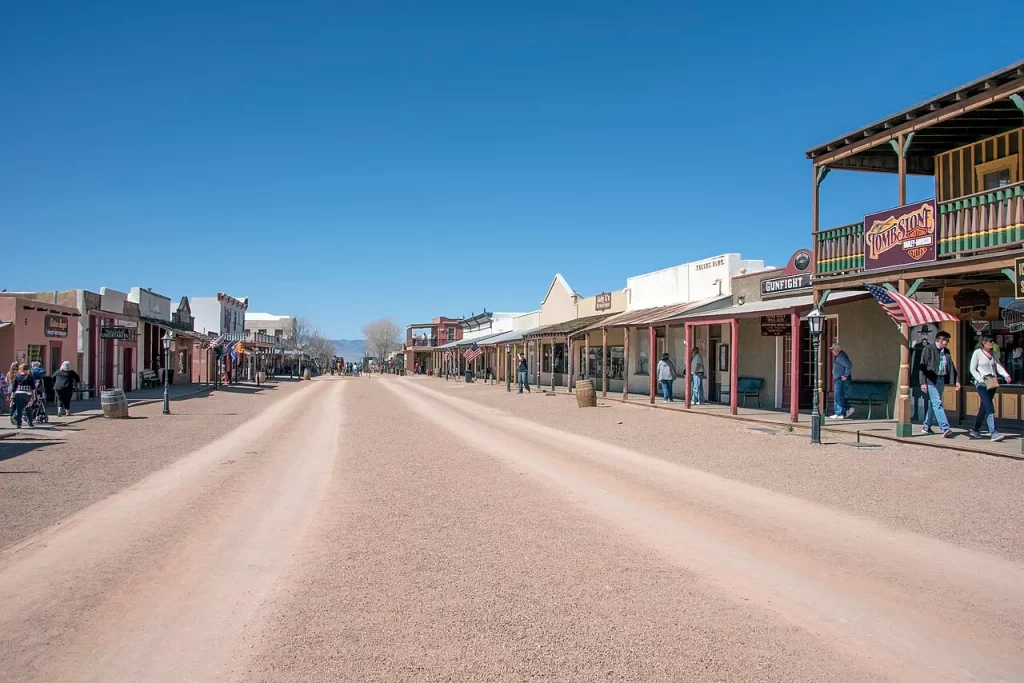
Step into the Old West at Tombstone Historic District, where Arizona’s frontier past comes to life. This National Historic Landmark preserves some of the town’s oldest buildings and most authentic Wild West architecture from the 1880s silver boom era.
Allen Street forms the heart of the district as the main thoroughfare. You’ll find historic sites like the famous O.K. Corral, where daily gunfight reenactments recreate the legendary 1881 showdown involving Wyatt Earp and Doc Holliday.
The district spans several blocks between Fremont, 6th, Toughnut, and 3rd Streets. You can explore the Tombstone Courthouse State Historic Park, which houses the original sheriff’s office, jail cells, and courtrooms. The museum exhibits showcase the area’s mining and ranching heritage.
Plan your visit between March and May or September and November for mild temperatures. The pleasant weather makes it comfortable to walk the historic streets and watch outdoor reenactments.
Tombstone earned its nickname “The Town Too Tough to Die” through decades of preserving its heritage. You’ll experience authentic Western history as you walk the same streets where miners, lawmen, and outlaws once roamed.
10) Phoenix — Desert Botanical Garden
The Desert Botanical Garden sits on 140 acres within Papago Park in Phoenix. You’ll find over 50,000 desert plants displayed against the red rocks of the Sonoran Desert.
This garden takes a different approach from typical botanical gardens. Instead of tropical greenery, you’ll explore carefully organized collections of cacti, succulents, and other desert plants. The garden shows you that desert landscapes can be just as visually interesting as any other type of garden.
The location makes it easy to reach from Phoenix, Scottsdale, Mesa, Tempe, Gilbert, and Chandler. It’s also near the Phoenix Zoo if you want to visit both in one day.
You’ll walk through 55 acres of trails that wind through different desert plant displays. The setting gives you a peaceful break from the city while teaching you about plants that thrive in Arizona’s climate.
Phoenix gets more than 300 days of sunshine each year, so you can visit the garden almost any time. Plan your trip for early morning or late afternoon during summer months when temperatures are cooler.
Travel Tips for Exploring Arizona
Arizona’s climate and vast distances between destinations require careful planning. Understanding the weather patterns and transportation options will help you make the most of your visit.
Best Times to Visit
Arizona’s best travel season depends on where you plan to go. The desert areas around Phoenix and Tucson are most comfortable from November through April, with daytime temperatures between 60°F and 80°F. Summer months bring extreme heat, often exceeding 110°F in low desert regions.
Northern Arizona, including the Grand Canyon and Flagstaff, follows different patterns. These higher elevation areas are ideal from May through October. Winter brings snow and cold temperatures that can close roads and trails.
Spring (March to May) and fall (September to November) offer the best balance if you plan to visit multiple regions. You’ll find moderate temperatures across the state and fewer crowds at major attractions. Hotel rates are also lower during these shoulder seasons compared to peak winter months.
Getting Around the State
Renting a car is essential for exploring Arizona. Public transportation between cities is limited, and major attractions are spread across hundreds of miles.
Interstate 10 runs east-west through Phoenix and Tucson, while Interstate 17 connects Phoenix to Flagstaff.
Plan for long driving distances. Phoenix to the Grand Canyon South Rim takes about 3.5 hours. Tucson to Sedona requires nearly 4 hours.
Fill your gas tank before leaving cities, as desert stretches can have 50-100 miles between stations.
Summer driving requires extra preparation. Carry at least one gallon of water per person in your vehicle. Check your tire pressure and coolant levels before long trips. Air conditioning failure in 115°F heat is dangerous.
Local Culture and History
Arizona’s cultural landscape spans over 14,000 years of human history, from ancient Indigenous civilizations to the frontier days of the Old West. The state preserves this heritage through historic sites, living museums, and protected cultural landmarks.
Indigenous Heritage
Arizona is home to 22 federally recognized tribes, making it one of the most culturally diverse states in America. The Navajo Nation, the largest reservation in the United States, covers portions of northeastern Arizona and preserves centuries-old traditions.
You can explore ancient cliff dwellings and pueblo ruins that showcase the architectural achievements of ancestral peoples.
Sites like Montezuma Castle and Canyon de Chelly reveal how Indigenous communities adapted to desert environments. Many locations remain sacred to tribal nations today.
The Hopi, Tohono O’odham, Apache, and other tribes maintain strong cultural practices throughout the state. You’ll find authentic art, jewelry, and crafts created by Native artisans at cultural centers and museums.
These communities continue to speak their ancestral languages and practice traditional ceremonies that have been passed down through generations.
Influences of the Wild West
Arizona’s Wild West history comes alive through preserved ghost towns and historic sites from the territorial period. Tombstone, famous for the Gunfight at the O.K. Corral, offers you a glimpse into 1880s frontier life with original buildings and reenactments.
Mining boom towns like Jerome and Bisbee showcase the state’s copper mining heritage. These communities transformed from rough mining camps into thriving towns during the late 1800s.
You can tour old mines and walk streets where miners, cowboys, and entrepreneurs once conducted business.
The Pioneer Living History Museum near Phoenix recreates life in territorial Arizona through original and reconstructed buildings from the 1800s.
Old West towns, stagecoach stops, and ranches throughout the state tell stories of settlers, outlaws, and lawmen who shaped Arizona’s frontier character.
Frequently Asked Questions
Arizona visitors often wonder about the state’s top attractions, romantic spots, family activities, and water features. The Grand Canyon ranks as the most visited site, while places like Sedona and Lake Powell offer distinct experiences for different types of travelers.
What is the number one tourist attraction in Arizona?
The Grand Canyon National Park holds the title as Arizona’s most visited attraction. Over 4.7 million people visit the South Rim each year to see the massive canyon that stretches 277 miles long and reaches depths of over a mile.
The South Rim stays open year-round and offers the most accessible viewpoints and facilities. You can walk along the rim trail, take a mule ride into the canyon, or watch the sunrise paint the rock layers in shades of red and orange.
Which Arizona destinations are best for couples looking for a romantic getaway?
Sedona stands out as the top romantic destination with its red rock views and luxury resorts. You can book spa treatments, enjoy fine dining, or watch the sunset from Airport Mesa with your partner.
Jerome offers a different romantic experience in a historic mining town perched on Cleopatra Hill. The small town features wine tasting rooms, art galleries, and bed and breakfasts with views of the Verde Valley.
Scottsdale provides upscale romance with five-star resorts, championship golf courses, and desert landscapes. You can relax by resort pools, dine at award-winning restaurants, or take hot air balloon rides at sunrise.
What are the best places in Arizona to visit with family and kids?
The Grand Canyon South Rim works well for families because the main viewpoints require minimal walking. Kids enjoy earning their Junior Ranger badges through the park’s educational program.
Sedona’s Slide Rock State Park lets children play in Oak Creek’s natural water slides formed by slippery red rocks. The park also has swimming areas and shaded picnic spots along the creek.
The Arizona-Sonora Desert Museum near Tucson combines a zoo, botanical garden, and natural history museum. Your kids can see desert animals like javelinas, bobcats, and hummingbirds in natural habitats.
Phoenix offers multiple family attractions including the Phoenix Zoo, Children’s Museum of Phoenix, and Castles N’ Coasters amusement park. These spots provide indoor and outdoor activities suitable for various ages.
Which Arizona spots offer the best water views, lakes, rivers, or swimming areas?
Lake Powell near Page provides 1,900 miles of shoreline with blue water surrounded by red rock canyons. You can rent houseboats, kayaks, or paddleboards to explore the lake’s many coves and side canyons.
Havasu Falls on the Havasupai Reservation features turquoise waterfalls that pour into swimming holes. The blue-green water gets its color from calcium carbonate and magnesium in the creek.
The Salt River east of Phoenix offers tubing, kayaking, and wildlife watching. Wild horses often graze along the riverbanks while you float down the gentle current during summer months.
Lake Havasu attracts boaters and beach lovers with its warm water and 400 miles of coastline. The London Bridge, relocated from England, spans part of the lake and creates a unique backdrop.
What are the best unique or hidden gems to visit in Arizona beyond the major attractions?
Antelope Canyon near Page shows you narrow slot canyons with light beams that shine through the openings above. The Navajo Nation manages tours through both Upper and Lower Antelope Canyon.
Bisbee is a former copper mining town in the Mule Mountains with colorful Victorian buildings and art galleries. You can tour the underground Copper Queen Mine and stay in the historic mining district.
Petrified Forest National Park displays logs turned to colorful stone over millions of years. The park also contains part of the Painted Desert and ancient petroglyphs left by early inhabitants.
Kartchner Caverns State Park near Benson protects living caves with formations still growing. Rangers lead tours through rooms filled with stalactites, stalagmites, and other cave features.
What are the best Arizona day trips that can be done in a single day from major cities?
From Phoenix, you can reach Sedona in two hours for red rock hiking and shopping. The drive north on Interstate 17 takes you from desert into higher elevations with pine trees.
Tucson serves as a base for visiting Saguaro National Park, which surrounds the city on both east and west sides. You can drive the scenic loops and hike among giant saguaro cacti in half a day.
Page makes a good starting point for seeing Antelope Canyon and Horseshoe Bend in one day. Both sites sit within 10 miles of town and tours take just a few hours.
Flagstaff puts you within an hour of the Grand Canyon South Rim, Walnut Canyon National Monument, and Sunset Crater. The city’s location makes it useful for visiting multiple northern Arizona attractions.