
Labor Day travel tips matter when highways fill up and airport lines stretch long. If you’re flying or driving during the long weekend, a little prep can save hours, cash, and your sanity.
Below, you’ll find the latest TSA guidance to speed through security, smart road strategies to dodge gridlock, and a simple plan to keep your trip smooth. Use these Labor Day travel tips to build a stress-free weekend from departure to return.
What to expect: volume, timing, and bottlenecks
- High demand across airports and interstates from Thursday afternoon through Tuesday morning, with peak outbound Friday 2–7 p.m. and peak return Monday 11 a.m.–7 p.m.
- Airport hotspots: major hubs, popular beach and national park gateways, and cities with large events.
- Road bottlenecks: metro beltways, popular beach/mountain routes, and construction zones. Expect slowdowns near toll plazas and service areas.
TSA alerts: what’s new and what to do
TSA anticipates heavy throughput and reminds travelers to pack smart, arrive early, and use digital tools.
- Arrive earlier than usual:
- Domestic: 2 hours is the floor; 2.5–3 hours for big hubs or early morning rush.
- International: 3 hours; add 30 minutes if checking bags.
- Use TSA tools:
- TSA PreCheck if you have it. If not, look for the standard line with more open lanes rather than just the shortest looking line.
- TSA Wait Times in your airport’s app or Google Maps to gauge security lines before you leave.
- myTSA app for prohibited items, checkpoint status, and live updates.
- Pack to pass screening:
- Liquids: 3.4 oz limit in a quart-size bag. Keep it accessible.
- Electronics: Laptops and tablets out unless you’re in PreCheck.
- Food: Pack solid foods; spreadable items count as liquids or gels.
- Meds and baby items: Allowed in reasonable quantities; declare them.
- ID and boarding pass:
- Real ID-compliant license or passport. Some airports use Credential Authentication Tech; still bring your ID.
- Mobile boarding passes are fine; screenshot as backup.
- Baggage strategy:
- Carry-on if you can; it saves time at both ends.
- If checking, pay and tag in-app where possible. Photograph your bag and tag for reference.
- Items that slow lines:
- Oversized liquids, packed aerosols, camping fuel, fireworks, pocket knives, and large tripods often trigger bag checks.
- Empty water bottle is fine; fill post-security.
Airport survival playbook
- Pick off-peak flights: Early morning departures face fewer delays and smoother connections.
- Choose smart seats: Aisle seats near the front speed up deplaning; great if you have a tight rental car window or train to catch.
- Track your flight: Use your airline app for gate changes, rebooking options, and baggage updates.
- Power and snacks: Bring a compact battery and protein-rich snacks. Lines are longest at food spots during rush hours.
- Backup routes: If you miss a connection, know alternative flights and nearby airports. Agents can help faster when you ask for specific options.
Road traffic tips: avoid the worst jams
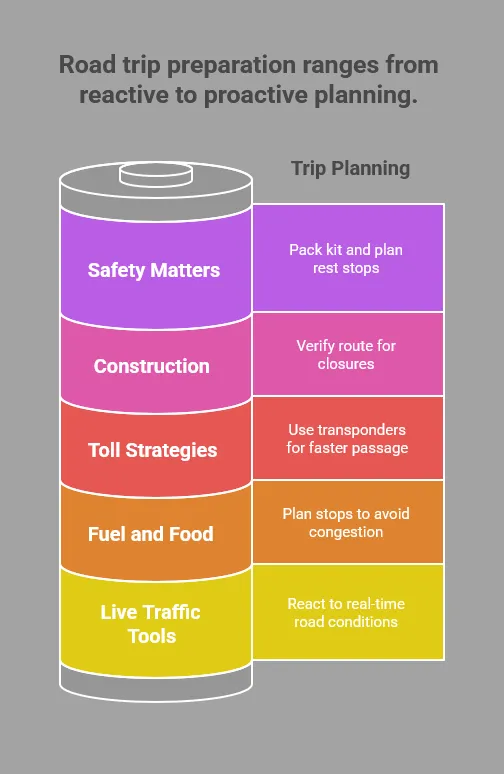
Labor Day travel tips also apply to the road. Expect congestion around city exits, bridges, and popular recreation areas.
- Leave at smart times:
- Go early: Thursday night late or Friday before 10 a.m.
- Return early: Monday before 10 a.m. or late at night; Tuesday morning can be calmer if you can shift a day.
- Use live traffic tools:
- Google Maps or Waze for real-time reroutes, incident alerts, and speed trap warnings.
- State DOT Twitter feeds or 511 lines for construction and closures.
- Plan fuel and food:
- Stop before you hit the main exit clusters near beaches or parks; those areas get swamped.
- Keep a cooler with water and simple snacks to skip long lines at rest stops.
- Toll strategies:
- Use transponders like E-ZPass, SunPass, or FasTrak to breeze through plazas.
- Check for holiday toll suspensions or peak price periods in your state.
- Construction and detours:
- Many projects pause, but lane closures can persist. Verify your route the morning you leave.
- Safety matters:
- Rest every 2–3 hours; switch drivers when possible.
- Don’t rely on near-empty gas stops at night in rural areas; fill up at half a tank.
- Keep a small kit: jumper cables, tire inflator, basic first aid, flashlight.
Family and group travel shortcuts
- Pack a “go bag” per person: snacks, meds, chargers, a light layer, headphones.
- Label bags and cases: name and phone inside and out.
- Use color coding: matching tags or ribbons make it easy to spot bags fast.
- Car hacks: trash bag, paper towels, seat-back organizer, and a small cooler keep the cabin tidy.
- Kid comfort: pre-download shows, rotate toys every hour, and plan two short park breaks on long drives.
Budget moves that still save time
- Flexible airports: Compare fares and traffic at nearby airports. A secondary airport can cut an hour on both ends.
- One-way rentals: If traffic looks brutal in one direction, check a one-way car rental paired with a flight or train back.
- Public transit to the airport: Skip pricey parking and avoid the last-mile jam near the terminal.
- Parking reservations: If you must drive, reserve off-site parking with shuttle tracking; arrivals are more predictable.
Weather and delays: reduce your risk
- Check the forecast 72, 48, and 24 hours prior. Watch for thunderstorms, heat advisories, or tropical activity along your route.
- Pad your plans: Add a 2–3 hour cushion for connections or event start times.
- Travel insurance: For expensive trips, consider coverage that includes weather or airline disruptions. Read the fine print before you buy.
Tech checklist to speed everything up
- Apps to install:
- myTSA, your airline app, hotel app, rental car app, Google Maps or Waze, a weather app, and your parking app.
- Digital wallet: Load cards, IDs where supported, and transit passes.
- Document backup: Email yourself copies of IDs, reservations, and car insurance. Store offline too.
Packing light: the Labor Day edition
- Clothing: pack neutral layers that mix and match; one pair of versatile shoes.
- Toiletries: travel sizes only; share items within your group to avoid duplicates.
- Beach or hike gear:
- Beach: microfiber towel, reef-safe sunscreen, foldable hat, flip-flops.
- Hike: compact daypack, water filter bottle, thin rain shell, headlamp.
- Keep it dry: use zip bags for swimsuits and a separate pouch for damp items on the ride home.
If you fly and drive on the same trip
- Book longer layovers if you’ll pick up a rental car after landing; 90 minutes is safer at busy hubs.
- Save your rental car confirmation offline; lines move faster if you can go straight to the car with a digital key or membership.
- Photograph your fuel level and the car exterior at pickup and drop-off.
Quick etiquette that speeds the line for everyone
- At TSA: empty pockets before you reach the bins, untie sweaters from your waist, and place small items inside your bag.
- At tolls: have your transponder mounted and ensure your payment card is current to prevent gate issues.
- At gas stations: pull forward when done, and leave the pump area clear for the next driver.
Emergency plan you’ll be glad you have
- Contacts: one person at home who has your itinerary.
- Meeting point: a spot your group will meet if phones die.
- Paper backup: printed boarding pass or confirmation can save the day when apps glitch.
- Cash buffer: keep small bills for tips, parking, and rural stops that are cash-only.
Sample one-page travel plan you can copy
- Outbound window: Leave Friday 6 a.m.; alternate Thursday 9 p.m.
- Route: I-95 to Exit X, backup via US-1 if slowdown exceeds 25 minutes.
- Fuel/food: Stop at Mile 120 travel plaza; backup at Mile 165.
- Airport: Arrive 2.5 hours early; carry-on only; PreCheck lane.
- Contacts: Share ETA with family group chat at departure and at first stop.
- Return window: Monday 7 a.m.; alternate Monday 9 p.m. or Tuesday 8 a.m.
Frequently asked questions
Can I bring sunscreen in my carry-on?
Yes, if it’s 3.4 oz or less. Larger goes in checked baggage.
Are snacks allowed?
Solid snacks are fine. Sauces and spreads count as liquids.
Will TSA accept mobile IDs?
Some airports do. Bring a physical ID anyway.
Is Friday night the worst time to drive?
Usually yes, from mid-afternoon to early evening.
Conclusion
Labor Day travel tips pay off when crowds swell and delays pop up. Plan your departure window, use TSA tools, and watch live traffic. Keep your packing tight, your documents handy, and a backup plan ready.
With a few smart moves, you can skip the worst lines, dodge the heaviest jams, and spend more time where it counts: enjoying your long weekend.