
Utah’s five national parks offer some of the most stunning landscapes in America, and Dog Friendly National Parks In Utah can be enjoyed with proper planning. If you’re bringing your dog along, it’s important to understand the park rules before you arrive.
Pets are allowed in Utah’s national parks but only in very limited areas like paved roads, parking lots, campgrounds, and a few specific trails. Dogs cannot access hiking trails, backcountry areas, or visitor centers at most of these parks.
Understanding where you can and cannot take your dog will help you plan a better trip. Each of Utah’s national parks has slightly different pet policies. Some allow dogs on certain paved paths while others restrict pets to developed areas only.
The good news is that many state parks and areas near Utah’s national parks welcome dogs on trails and offer more freedom to explore with your pet. You can still enjoy an amazing Utah adventure with your dog if you know where to go and how to prepare.
Key Takeaways
- Dogs are allowed in Utah’s national parks but only in paved areas, parking lots, campgrounds, and very few trails
- Each of Utah’s five national parks has different pet rules that you must follow to avoid problems
- State parks and nearby areas offer better dog-friendly hiking options than the national parks
Dog Access Rules in Utah’s National Parks
All of Utah’s Mighty 5 national parks have strict rules about where you can take your dog, requiring leashes no longer than 6 feet and limiting access to developed areas only. Your dog must stay out of trails, backcountry areas, and visitor centers across all five parks.
Leash Requirements and Restrictions
Your dog must be on a leash no longer than 6 feet at all times when outside your vehicle in Utah national parks. Carrying your pet does not count as proper restraint. You need to use a leash, crate, or cage.
At Arches National Park, you can walk your dog on park roads, in established picnic areas, at Devils Garden Campground, and in parking lots.
Your dog cannot go on any hiking trails or enter the visitor center. You can only leave your pet unattended at a paid campsite in Devils Garden Campground if it doesn’t cause a disturbance.
Canyonlands National Park allows dogs on paved scenic drives, parking lots, and the Potash/Shafer Canyon road. Your pet cannot visit overlooks, rivers, hiking trails, or any backcountry areas. Dogs must stay leashed in the Island in the Sky and Needles campgrounds.
Bryce Canyon National Park permits dogs on all paved surfaces including campgrounds, roads, parking lots, and paved viewpoint areas. You cannot bring your dog into public buildings, on shuttle buses, or on unpaved trails and viewpoints.
Dog Friendly National Parks In Utah: Pet Safety Guidelines
Desert conditions can be deadly for your dog. Car temperatures rise quickly even on cool days, which can cause heat exhaustion or death. Park officials recommend never leaving pets in cars when temperatures exceed 68 degrees, even with cracked windows.
If you must leave your dog in the car, crack windows as much as possible and leave water available. You need to watch your pet constantly and pick up all solid waste in appropriate containers.
Park staff may investigate reports of excessive barking or noise from your pet. You cannot leave your dog tied to objects in most areas of the Mighty 5 national parks. Nearby towns like Moab and Panguitch offer kennel services if you want to hike trails where dogs aren’t allowed.
Why Restrictions Exist
Pet restrictions protect native wildlife that these parks were created to preserve. Dogs leave behind a predator scent that can linger for long periods and disrupt or alter the behavior of wild animals.
Your pet may scare, chase, or transmit diseases to wildlife in the Mighty 5. These interactions can harm the delicate ecosystems these parks protect. The rules apply even to well-behaved dogs because the scent alone affects wildlife behavior patterns.
Park superintendents have some discretion to create park-specific rules under Federal Regulations. When you’re unsure about rules at any of the Mighty 5 national parks, ask park staff for clarification before bringing your dog into an area.
Zion National Park: Visiting with Your Dog
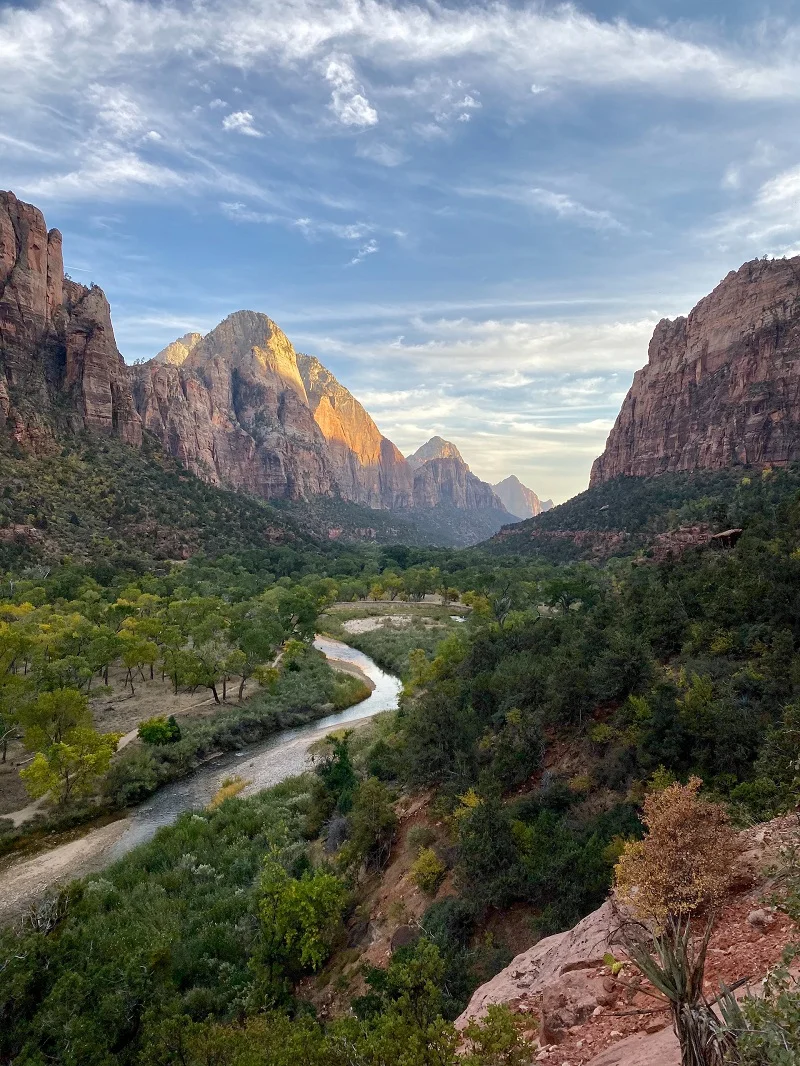
Zion National Park has limited areas where dogs are allowed, with most hiking trails off-limits to pets. You can explore the Pa’rus Trail with your dog and stay in certain campgrounds, but wilderness areas and popular hiking routes remain restricted.
Dog-Friendly Areas and Trails
The Pa’rus Trail is the primary dog-friendly hiking option at Zion National Park. This paved, 3.5-mile trail follows the Virgin River from the Zion Canyon Visitor Center and remains relatively flat throughout.
Your dog must stay on a leash no longer than 6 feet at all times. You can also bring your pet to developed areas like campgrounds, picnic areas, parking lots, and roads within the park.
Dogs are allowed in developed campgrounds when environmental conditions are safe. You need to bag and remove your pet’s waste from all areas.
The park offers a B.A.R.K. Ranger program that helps you follow proper pet etiquette. You can pick up a pledge card at any visitor center to become an official B.A.R.K. Ranger.
Unpermitted Zones for Pets
Dogs cannot access any wilderness trails at Zion, including popular hikes like Angels Landing and The Narrows. All backcountry areas remain off-limits to pets.
You cannot leave your dog unattended in your vehicle when temperatures pose health risks. Pet owners who violate park regulations face citations with a minimum fine of $100.
Service animals trained to perform specific tasks for people with disabilities can access all park locations. Emotional support animals do not qualify as service animals under the Americans with Disabilities Act.
Nearby Alternatives for Dog Owners
Snow Canyon State Park and Sand Hollow State Park both welcome dogs on their trails. These parks near Zion offer more pet-friendly hiking options in Southern Utah.
You can find boarding kennels in Rockville, Hurricane, St. George, Kanab, and Cedar City. Veterinarian services are available in these same communities if your pet needs medical care during your visit.
State parks in the area have fewer restrictions than national parks and allow pets on marked trails. This gives you more flexibility to explore with your dog while staying near Zion.
Bryce Canyon National Park: Canine Experiences
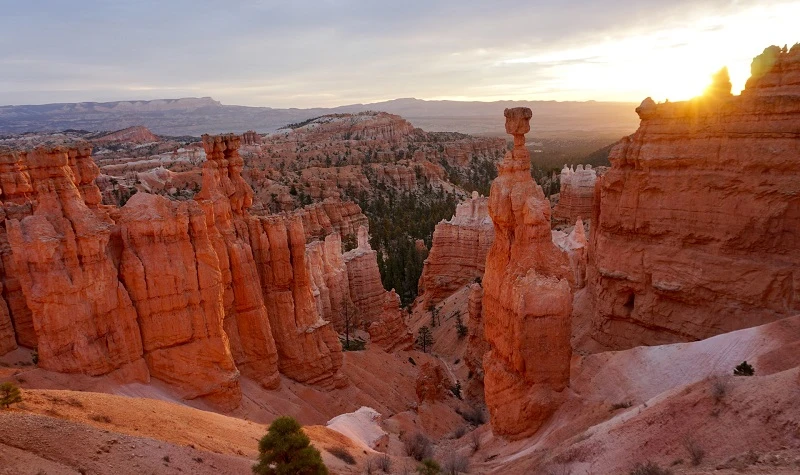
Dogs can visit Bryce Canyon National Park, but they’re restricted to paved surfaces only. You’ll find several dog-friendly areas at Bryce Canyon including specific trails, viewpoints, and campgrounds where your pet can accompany you.
Accessible Areas for Dogs
Pets are only permitted on paved surfaces throughout Bryce Canyon National Park. This includes all campgrounds, parking lots, and paved roads within the park boundaries.
Your dog can join you on the Rim Trail, but only on the half-mile section between Sunset Point and Sunrise Point. The paved Shared Use Path between the park entrance and Inspiration Point is also open to dogs.
Dogs cannot access unpaved trails like the Fairyland Loop Trail or any backcountry hiking paths. They’re also prohibited from entering public buildings and riding on shuttle buses. These restrictions apply even if you carry your pet.
Your dog must stay on a leash no longer than six feet at all times. You cannot leave your pet unattended or tied to objects anywhere in the park.
Paved Pathways and Viewpoints
All paved viewpoint areas welcome dogs except for Piracy Point, which remains off-limits to pets. The paved viewpoints provide access to see the famous hoodoo formations without leaving designated surfaces.
The section of Rim Trail between Sunset and Sunrise Points offers the best dog-friendly hiking experience. This paved path gives you and your dog views of the canyon’s distinctive rock spires.
You must pick up all pet waste immediately and dispose of it in provided garbage containers. Your dog cannot make unreasonable noise that disturbs other visitors or wildlife.
Pet owners who violate park regulations face citations with a minimum fine of $75.
Rules for Camping with Dogs
Dogs are allowed in all campgrounds within Bryce Canyon National Park as long as they stay on paved surfaces. You can keep your pet at your campsite, but the same leash requirements apply.
You cannot leave your dog unattended in your vehicle. The park prohibits idling and generator use in parking lots, so you can’t run air conditioning to keep your pet cool. Consider the current temperature before leaving your dog in a car.
Kennels near Bryce Canyon are available in surrounding towns if you need pet boarding. Options include Panguitch (30 miles away), Kanab (74 miles), Cedar City (85 miles), and Richfield (100 miles).
Arches National Park: Exploring with Pets
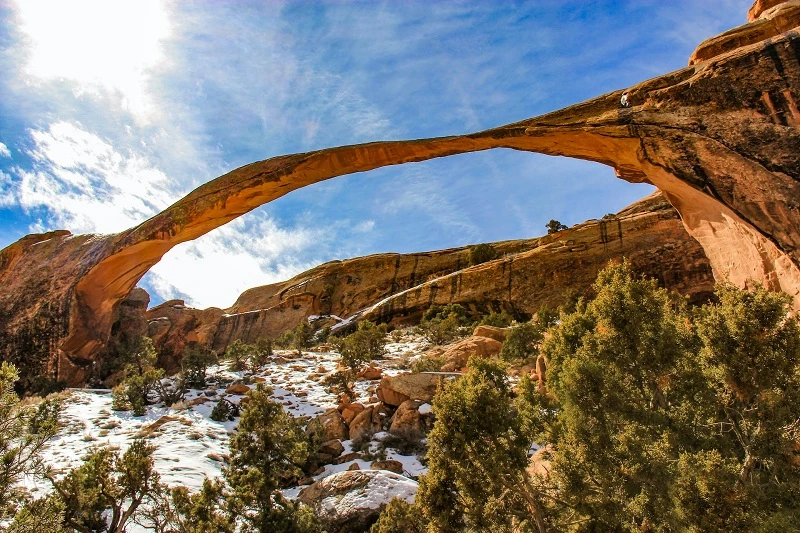
Arches National Park has strict rules about where pets can go, limiting them to paved areas and campgrounds while prohibiting them from all trails and overlooks. Your dog can join you in specific zones like Devils Garden Campground, but understanding these restrictions helps you plan your visit better.
On-Leash Areas in the Park
You can bring your pet to designated areas within Arches National Park, but they must stay on a leash no longer than 6 feet at all times. Your dog is allowed along established roads and in parking areas throughout the park.
Pets can accompany you in established campgrounds and picnic areas. However, your pet cannot go on any hiking trails, even if you carry them in a carrier. They are also banned from all overlooks and visitor centers.
You must pick up your pet’s waste immediately and dispose of it in the nearest trash receptacle. Never leave your pet tied to objects other than your own parked vehicle. You cannot lead pets by leash from a bicycle or vehicle.
Important temperature warning: When air temperatures exceed 65°F, your pet can die in a parked vehicle even with windows cracked. Temperatures in the park regularly exceed 100°F during warmer months.
Devils Garden Campground Policies
Devils Garden Campground welcomes leashed pets at your campsite. You can walk your dog through the campground area on established paths and roads.
The same 6-foot leash requirement applies at the campground. Your pet cannot make excessive noise that disturbs other campers or wildlife. Hot pavement poses a serious risk to your dog’s paws at Devils Garden Campground.
Check pavement temperature before walking your pet. When air temperature reaches 77°F, asphalt can hit 125°F and burn skin in 60 seconds. At 87°F air temperature, pavement reaches 143°F.
Place your hand on the pavement for 7-10 seconds. If it feels too hot for you, it will burn your dog’s paws.
Limitations on Hiking Trails
Dogs are not allowed on any trails in Arches National Park, making it one of the most restrictive national parks for pets. This includes popular trails like Delicate Arch, Landscape Arch, and Windows Trail.
The ban exists to protect wildlife from disruption. Dogs alter the natural behavior of desert animals, and even their scent can disturb wildlife movement. In the harsh desert environment, this extra stress threatens species survival.
Sharp rocks, cliff edges, rattlesnakes, and scorpions create hazards for pets on trails. Coyotes and mountain lions may view your dog as prey. Pets can also damage fragile desert soils and archeological sites.
Service animals trained to perform specific tasks for people with disabilities are exempt from trail restrictions. Emotional support animals and therapy dogs do not qualify under the Americans with Disabilities Act and must follow standard pet rules.
Canyonlands National Park: Pet Guidelines
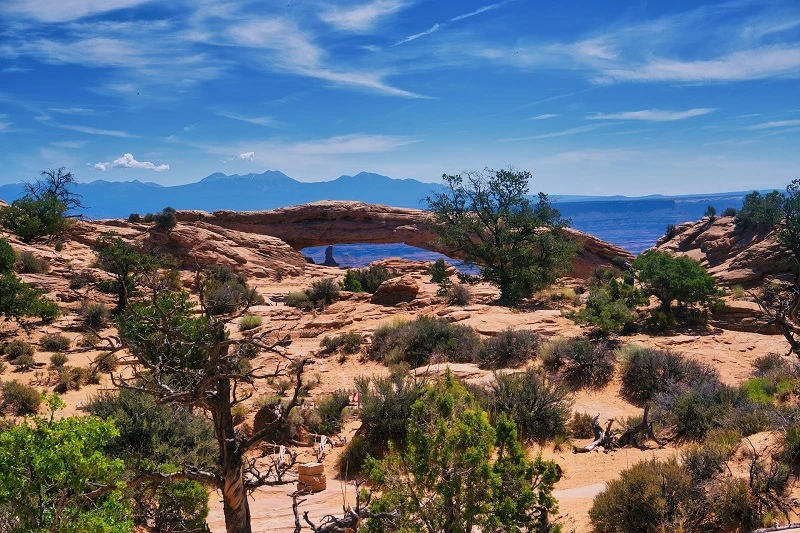
Canyonlands has strict limits on where you can bring your dog, with pets banned from all trails and overlooks. Your dog can join you in specific front-country areas like roads, parking lots, and designated campgrounds.
Permitted Areas and Drives
Pets must stay on a leash that is 6 feet or shorter at all times when outside your vehicle. You can walk your leashed dog along established front-country roads and in parking areas throughout the park.
Your pet can ride inside your vehicle on the Shafer Trail to Potash Road at Island in the Sky. When snow or mud closes the road to Beef Basin via Cathedral Butte, you can travel with pets across the Needles district using the Elephant Hill-Devil’s Lane/Bobby’s Hole roads.
Your dog must stay inside the vehicle or remain on the designated road surface only when leashed.
Dogs are not allowed on any hiking trails, at overlooks, in visitor centers, or anywhere in the backcountry. This includes backcountry roads and river trips. You must pick up all pet waste immediately and throw it away in the nearest trash bin.
Campgrounds with Dog Access
Your leashed dog can stay with you in established front-country campgrounds and picnic areas. The same 6-foot leash rule applies in these locations.
You cannot leave your pet tied to objects other than your own parked vehicle. Never leave your dog unattended in your car when temperatures could harm them. Cars heat up quickly, and pets can die in vehicles when air temperatures reach just 65°F, even with cracked windows.
Watch for signs of heat illness in your dog, including vomiting, heavy panting, or confusion. Temperatures at Canyonlands regularly exceed 100°F, making the park dangerous for pets during summer months.
Capitol Reef National Park: Bringing Your Dog
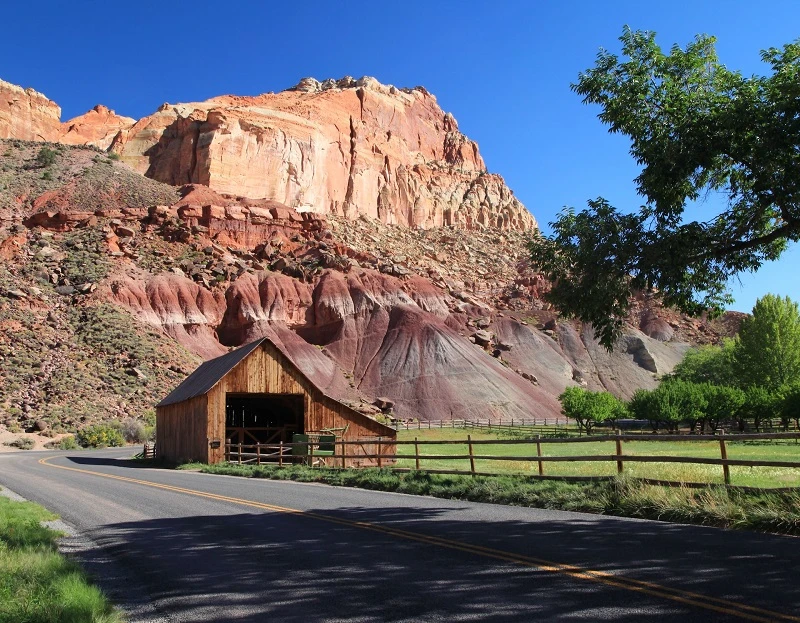
Capitol Reef allows dogs in specific developed areas including orchards, campgrounds, and along roadways, making it more accessible for pet owners than many other national parks in Utah. Your dog must stay on a leash no longer than 6 feet at all times in permitted areas.
Orchards and Developed Areas for Pets
You can bring your dog into the unfenced and unlocked orchards at Capitol Reef where the park maintains historic fruit trees. Dogs are welcome in both the Fruita Campground and along the trail connecting the visitor center to the campground.
The Fremont River Trail offers another pet-friendly option. You can walk with your dog from the campground to the south end of Hattie’s Field, where a gate marks the boundary beyond which pets cannot pass.
Dogs are not allowed:
- On other hiking trails
- In public buildings
- In the backcountry
- In fenced orchards
The park has no kennels available. You cannot leave your pet unattended in the campground, so plan your activities accordingly before bringing your dog.
Roadways and Picnic Spots for Dogs
Your dog can accompany you within 50 feet of the center line of any paved or dirt roads open to public vehicle travel. This gives you room to stop and enjoy views with your pet along scenic drives.
The Chesnut and Doc Inglesby picnic areas both welcome leashed dogs. All parking areas open to public vehicle access also permit pets.
Important safety note: Desert temperatures can be deadly for dogs left in vehicles. Cars heat up quickly even on cool days, and leaving a pet in a car becomes dangerous when temperatures exceed 68 degrees, even with windows cracked. Always leave water and maximize window ventilation if you must leave your pet briefly in your vehicle.
Dog Friendly Trails and Parks Near Utah’s National Parks
Utah offers excellent alternatives where dogs can explore freely on leashes. Lower Calf Creek Falls provides a waterfall hike through desert scenery, Snow Canyon State Park features red rock trails with volcanic landscapes, and Dead Horse Point State Park delivers stunning canyon overlooks.
Lower Calf Creek Falls Trail
Lower Calf Creek Falls Trail in Grand Staircase-Escalante National Monument offers a 6-mile round trip hike to a 126-foot waterfall. The trail winds through a scenic canyon with riparian vegetation and ancient rock art along the way.
Your dog can enjoy this dog-friendly hiking trail as long as they stay on leash. The path follows Calf Creek through sandy terrain with some shade from canyon walls. You’ll find pools where dogs can cool off during hot desert days.
The trail gains about 250 feet in elevation and takes most hikers 3-4 hours to complete. You should bring plenty of water for both you and your dog since the desert climate can be harsh.
Grand Staircase-Escalante National Monument welcomes leashed dogs on most trails, making it a great alternative to the more restrictive national parks nearby.
Snow Canyon State Park Hikes
Snow Canyon State Park near St. George features red and white Navajo sandstone cliffs mixed with black volcanic rock. The park has over 38 miles of trails where you can hike with your leashed dog.
The Whiptail Trail spans 6 miles through lava flows and sandstone formations. This trail gives you and your dog access to unique geological features not found in nearby Zion National Park. Several shorter loops connect throughout the park for easier options.
You’ll find trails ranging from easy walks to moderate climbs. The Jenny’s Canyon Trail and the Hidden Pinyon Trail both allow dogs and showcase the park’s colorful rock layers. Snow Canyon stays slightly cooler than surrounding desert areas due to its elevation around 3,000 feet.
Dead Horse Point State Park Paths
Dead Horse Point State Park sits on a high plateau 2,000 feet above the Colorado River. The park allows leashed dogs on all hiking trails and in the campground areas.
The scenic overlook at Dead Horse Point ranks among the most photographed spots in Utah. Your dog can walk the rim trails that circle the point for different views of Canyonlands below. The East Rim Trail and West Rim Trail each stretch about 4 miles with relatively flat terrain.
These paths stay close to dramatic cliff edges with views of the Colorado River winding through red rock canyons. The park provides a similar landscape to nearby Canyonlands National Park but with full dog access. Morning and evening offer the best light and cooler temperatures for hiking with your pet.
State Parks and Natural Areas for Dogs in Utah
Utah offers state parks and natural areas where you can bring your dog to explore unique geological features. These locations provide pet-friendly access to stunning landscapes while following specific rules to protect the environment.
Kodachrome Basin State Park
Kodachrome Basin State Park welcomes leashed dogs on all trails and throughout the park. The park features 67 towering rock spires called sedimentary pipes that you won’t find anywhere else in the world.
Your dog can join you on the 3-mile Angel’s Palace Trail, which offers views of the colorful rock formations. The park also has shorter trails like the Nature Trail and Panorama Trail that work well for dogs who prefer easier hikes.
The park provides pet-friendly campsites where you and your dog can stay overnight. You need to keep your dog on a leash no longer than six feet at all times. Dogs are not allowed inside park buildings or on established beaches.
Morning Glory Natural Bridge
Morning Glory Natural Bridge sits within the Grand Staircase-Escalante National Monument, where dogs are allowed on trails. This natural bridge spans 243 feet and ranks as one of the largest natural bridges in the world.
The hike to reach the bridge covers about 6 miles round trip along Morning Glory Creek. You’ll need to wade through water at multiple creek crossings, so plan accordingly for you and your dog. The trail follows the creek bed through a narrow canyon with sheer walls.
Your dog must stay on a leash during the entire hike. Bring plenty of water since the creek water may contain harmful bacteria. The trail can be muddy and slippery, especially after rain.
Dog Boarding, Daycare, and Veterinary Services
When exploring Utah’s national parks, you’ll need reliable care options for your dog during visits to trails where pets aren’t allowed. Karen’s Canine Campground near Moab provides daycare services, and the Moab Veterinary Clinic offers both daycare and emergency care when needed.
Karen’s Canine Campground and Local Options
Karen’s Canine Campground is a popular choice for dogs visiting the Moab area. You should make an advanced reservation because this facility fills up quickly. The campground provides a safe environment for your dog while you explore Arches and Canyonlands National Parks.
If Karen’s Canine Campground is fully booked, you have other options in the area. Moab National Bark offers quality doggie daycare and boarding services in Moab. This facility provides a safe place for your dog to play while you visit nearby national parks.
Moab Veterinary Clinic for Emergencies
The Moab Veterinary Clinic serves two purposes for travelers with dogs. The clinic provides doggie daycare services as a backup option when other facilities are full. This gives you flexibility in your travel plans.
The clinic also handles veterinary emergencies. When you’re hiking with your dog in remote areas around Utah’s national parks, having access to emergency veterinary care is important. The clinic can treat injuries from hiking or heat-related issues that can occur in Utah’s desert climate.
Dog Etiquette and Preparation for Utah Adventures
Proper preparation and respectful behavior keep trails safe and enjoyable for everyone. Understanding waste management, wildlife interactions, and temperature concerns protects both your dog and Utah’s natural spaces.
Waste Disposal and Trail Courtesy
You must bring bags to pick up after your dog on all trails and dispose of waste in appropriate containers. Many trailheads lack trash bins, so pack out what you pack in, including dog waste bags.
Keep your dog on a leash when required, which is the rule for all Utah state parks with a maximum six-foot length. Even in areas where off-leash hiking is permitted on BLM land, your dog should remain under vocal control at all times.
Not all visitors welcome dog interactions. Keep your dog from jumping on hikers or blocking narrow trail sections. Excessive barking disturbs wildlife and other visitors, so work on training before hitting popular trails.
Move to the side when faster hikers or mountain bikers approach. On shared-use trails, give right of way to horses and pack animals, as dogs can spook them.
Avoiding Wildlife Disturbance
Dogs chasing wildlife creates serious dangers for everyone involved. Wild animals experience stress when pursued, which can harm their health and survival, especially during breeding seasons or harsh weather.
Your dog faces risks from wildlife encounters too. Black bears live in regions like the Manti-La Sal National Forest, and encounters can turn dangerous quickly. Keep your dog leashed in areas with wildlife and grazing livestock.
Chasing wildlife puts you at risk as well. Dogs may lead dangerous animals back to you when they return. In southern Utah, semi-feral dogs and coyotes present additional concerns in some areas.
Watch your dog near cliff dwellings and archaeological sites. Dogs can accidentally damage sacred and delicate historical locations while exploring canyon walls and hanging gardens.
Heat Awareness and Hydration Tips
Car temperatures rise rapidly in Utah’s sun, even with cracked windows and on seemingly cool days. Heat exhaustion and death can occur quickly, so never leave your dog in a vehicle during warm months.
Bring water for both yourself and your dog, as not all natural water sources are safe for drinking. Southern Utah’s desert terrain offers limited shade and water access on many trails.
Hot sand and rock surfaces burn paw pads. Check ground temperature with your hand before starting hikes during midday hours. Early morning or evening hikes work better in summer.
Plan for doggy daycare when visiting areas where dogs aren’t allowed on trails rather than leaving them in vehicles.
Frequently Asked Questions
Utah’s national parks have specific rules about pets, and most activities are limited to developed areas like parking lots and campgrounds. Dogs must stay on leashes no longer than 6 feet, and heat safety becomes a serious concern in desert conditions.
What are the pet policies for national parks in Utah?
At Utah’s Mighty 5 parks, dogs must be restrained outside vehicles with a crate, cage, or leash under 6 feet—carrying doesn’t count. Dogs can’t be left unattended except at some paid campsites.
Can dogs access any hiking trails within Utah’s national parks?
Dogs are not allowed on hiking trails at most of Utah’s national parks. The Pa’rus Trail at Zion National Park allows pets, making it the only paved trail in the Mighty 5 where you can walk your dog.
All other trails in Arches, Canyonlands, Capitol Reef, Bryce Canyon, and the rest of Zion remain off-limits to pets. This includes backcountry areas and unpaved viewpoints.
Are there specific areas within Utah national parks that are more pet-friendly?
Paved areas offer the most pet access in Utah’s national parks. Dogs are allowed on park roads, parking lots, picnic areas, and campgrounds. Bryce Canyon allows pets on all paved surfaces, while Capitol Reef permits them in campgrounds, picnic areas, orchards, and roads.
Which national park in Utah provides the best experience for visitors with dogs?
Zion is the best park for dog owners, with the Pa’rus Trail, Zion Lodge grounds, roads, campgrounds, and picnic areas open to pets. Bryce Canyon allows dogs at paved viewpoints, while Capitol Reef offers scenic drives on paved and dirt roads.
What safety considerations should dog owners be aware of when visiting Utah’s national parks?
Desert heat is the biggest risk for pets in Utah’s parks. Cars heat up fast, even on cool days. Don’t leave pets in vehicles over 68°F. Always clean up pet waste, and prevent barking or behavior that disturbs others.
What accommodations are available for visitors with dogs near Utah’s national parks?
Several kennels near Utah’s parks care for dogs while pets aren’t allowed on trails. Karen’s Canine Campground and Moab Veterinary Clinic serve Arches and Canyonlands, Pawz Dogz is near Bryce, and Doggy Dude Ranch is near Zion. Pet-friendly hotels are available in Moab, Panguitch, and Springdale.