
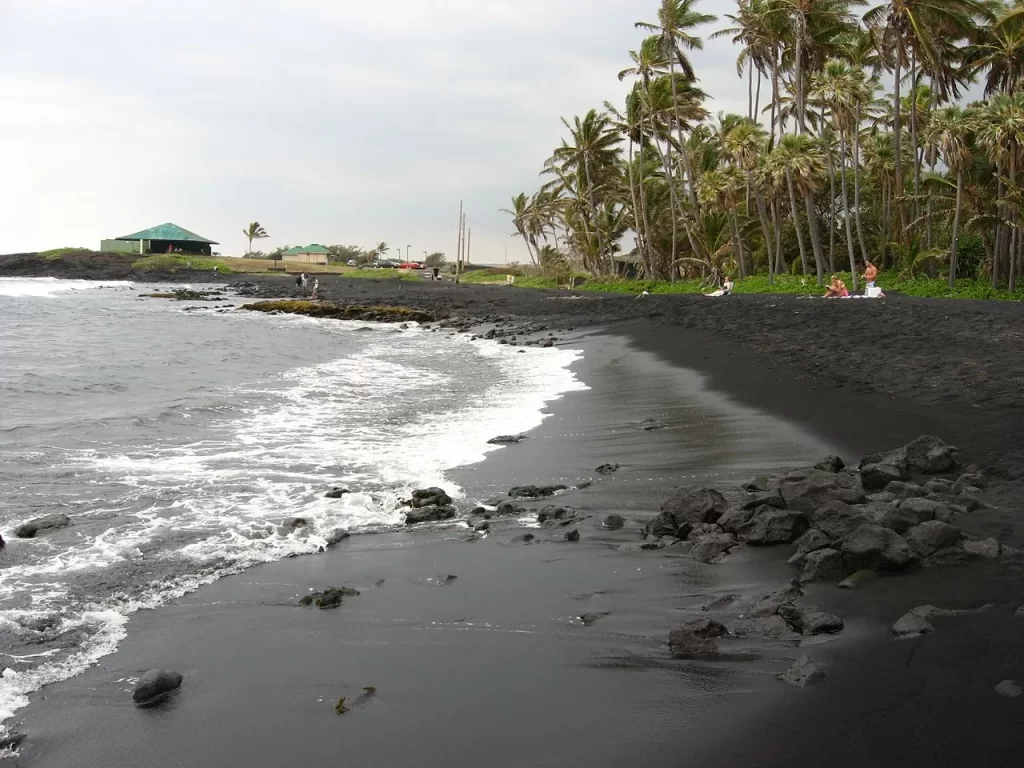
Hawaii’s black sand beaches offer a striking contrast to the typical white sand shores most travelers expect. These dark volcanic beaches are found primarily on the Big Island and Maui, where active volcanic activity has created dramatic coastlines through rapid cooling of lava meeting ocean water.
The resulting beaches feature sand ranging from jet black to deep gray, surrounded by lush tropical vegetation and rugged lava rock formations.
When you visit a black sand beach in Hawaii, you’re witnessing geology in action. These beaches exist because volcanic glass fragments have been broken down into fine grains over time.
The Big Island has the highest concentration of black sand beaches due to its ongoing volcanic activity, while Maui offers several accessible options along its northeast coast.
Your experience at these beaches goes beyond unique scenery. Many black sand beaches provide opportunities to see sea turtles, explore tide pools, and snorkel in protected coves.
Understanding where to find these beaches and how to visit them safely will help you make the most of this distinctive Hawaiian attraction.
Key Takeaways
- Black sand beaches form when lava rapidly cools upon contact with ocean water, creating volcanic glass fragments that break down into dark sand
- The Big Island and Maui have the most accessible black sand beaches, with Punalu’u and Wai’anapanapa being among the most popular destinations
- These beaches offer unique wildlife viewing opportunities including sea turtles, require advance reservations at some locations, and need safety awareness due to strong currents
How Black Sand Beaches Form in Hawaii
Black sand beaches in Hawaii are direct products of volcanic eruptions meeting ocean water, creating dramatic geological transformations through intense heat exchanges and mechanical breakdown of basaltic material.
Volcanic Activity and Lava Flows
Hawaii’s black sand beaches owe their existence to active shield volcanoes like Kīlauea and Mauna Loa. These volcanoes continuously produce molten lava that reaches temperatures exceeding 2,100 degrees Fahrenheit.
When lava flows move from their source toward the coastline, they carry iron-rich basaltic material across lava fields.
The process accelerates when flowing lava reaches the Pacific Ocean. The extreme temperature difference between molten rock and cold seawater creates violent steam explosions called littoral explosions.
These powerful reactions shatter the rapidly cooling lava into countless fragments ranging from fine particles to larger chunks.
Hawaii Volcanoes National Park provides some of the best locations to observe this ongoing geological process. The park’s volcanic landscape showcases both active flows and historical evidence of lava-ocean interactions.
Basalt Rock and Olivine Crystals
Basalt rock forms the primary component of Hawaii’s black sand. This iron-rich volcanic rock gives the sand its characteristic dark color and magnetic properties. Unlike continental beaches that contain durable quartz sand, basaltic sand remains relatively young and fragile.
Some Hawaiian beaches contain olivine crystals mixed with black basalt, creating distinctive green flecks or entirely green beaches. Olivine is a semi-precious mineral that forms deep within the earth’s mantle.
When volcanic eruptions bring olivine-rich lava to the surface, ocean erosion selectively removes lighter basalt particles while heavier olivine crystals remain concentrated on shore.
The composition of each beach depends on the specific lava chemistry and erosion patterns at that location.
Lava Fields and Black Sand Creation
Ocean waves complete the transformation from volcanic rock to beach sand. After littoral explosions create glassy basalt fragments, waves continuously grind and sort these pieces.
The mechanical action separates finer particles from larger ones, depositing smooth black grains along the shoreline.
This process makes Hawaii’s black sand beaches living geological features that require ongoing volcanic input. Basalt breaks down much faster than quartz, so without fresh material from Kīlauea volcano or other active sources, the sand gradually washes out to sea.
The 2018 Kīlauea eruption demonstrated this cycle by creating new black sand at Pohoiki while earlier flows had buried the Kaimū beach in 1990.
You can observe various stages of this process across different lava fields, from fresh flows still cooling to established beaches where waves have worked the material for decades.
Where to Find Black Sand Beaches in Hawaii
Black sand beaches concentrate on Hawaii’s youngest islands, where volcanic activity created these distinctive shores. The Big Island holds the most options, while Maui offers several notable locations.
Islands with Black Sand Beaches
The Big Island contains the highest concentration of black sand beaches in Hawaii. You’ll find beaches like Punaluu, Kehena, Richardson Beach Park, and Pohoiki scattered along the eastern and southern coasts.
Waipi’o Valley and Pololu Valley on the north shore feature dramatic black sand beaches surrounded by towering cliffs.
Maui ranks second with multiple black sand beaches. Waianapanapa State Park near Hana showcases one of the most accessible and photogenic options. The island’s volcanic history created several smaller black sand coves along the eastern coastline.
Molokai has limited black sand beaches, with most concentrated on the island’s less accessible northern shore. These beaches remain relatively undeveloped and require effort to reach.
The green sand beach at Papakolea on the Big Island represents a rare variation. This beach contains olivine crystals mixed with volcanic material, creating its distinctive green color.
Why There Are No Black Sand Beaches on Oahu
Oahu lacks black sand beaches because the island formed millions of years ago, making it one of Hawaii’s oldest islands. Erosion removed the volcanic material that creates black sand over time. The island’s last volcanic activity occurred roughly 100,000 years ago.
Oahu’s beaches consist primarily of white sand created from coral and shell fragments. The ocean waves and currents broke down these materials over millennia, replacing any original volcanic sand.
Without recent lava flows to replenish black sand, natural processes converted the shoreline to the white and tan beaches you see today.
Newly Formed Black Sand Beaches
The 2018 Kilauea eruption created new black sand beaches on the Big Island. Lava flows expanded Pohoiki Beach and stopped just meters from destroying the boat launch completely. This eruption added fresh volcanic material to existing beaches and formed entirely new sections of shoreline.
Kaimu Beach formed in 1990 when lava buried the original beach and created a new black sand shore. The beach continues to evolve as ocean waves break down the cooled lava into finer particles.
Active volcanic processes on the Big Island mean new black sand beaches may form during future eruptions. These newest additions provide the finest, darkest sand because wave action hasn’t yet smoothed and dispersed the volcanic material.
Best Black Sand Beaches on the Big Island
The Big Island hosts Hawaii’s most impressive collection of black sand beaches, formed when molten lava meets ocean water and shatters into fine volcanic fragments.
These beaches range from family-friendly spots with full amenities to remote coastlines accessible only by trail, with several offering excellent opportunities to see Hawaiian green sea turtles in their natural habitat.
Punaluʻu Black Sand Beach
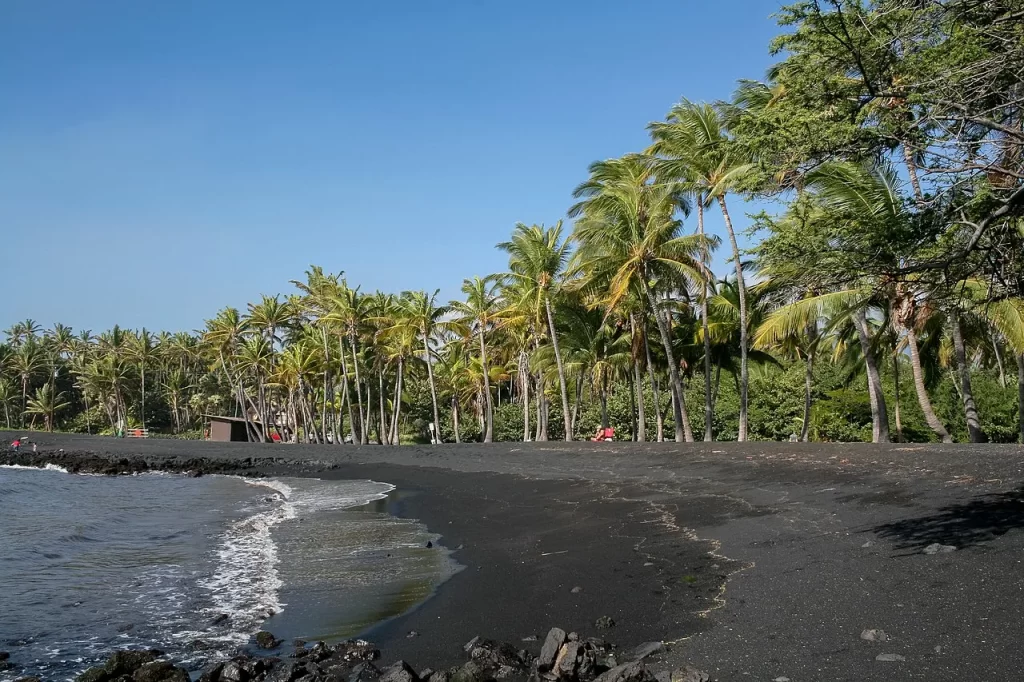
Punaluʻu Black Sand Beach ranks as the most accessible and visitor-friendly black sand beach on the Big Island.
Located on the southeastern coast between Naalehu and Pahala, Punaluu Beach features a wide stretch of fine black sand bordered by coconut palms and equipped with restrooms, showers, picnic tables, and lifeguards on duty.
The beach is famous for its Hawaiian green sea turtles (honu) that regularly come ashore to rest on the warm black sand.
You’ll often spot these marine creatures basking on the beach or feeding on the abundant algae and seaweed in the calm waters. Remember to maintain at least 10 feet distance from the turtles as required by NOAA guidelines.
The swimming conditions at Punaluʻu vary depending on ocean swells, but the waters are often calm enough for wading and snorkeling. You may notice cold spots in the water caused by underground freshwater springs mixing with the warmer ocean.
Behind the beach, you can explore a freshwater pond and see the distinctive Australian Moreton Bay fig trees with their sprawling, winding trunks. Two free parking lots serve the beach, accessed via Highway 11 to Ninole Loop Road.
Kaimū Black Sand Beach
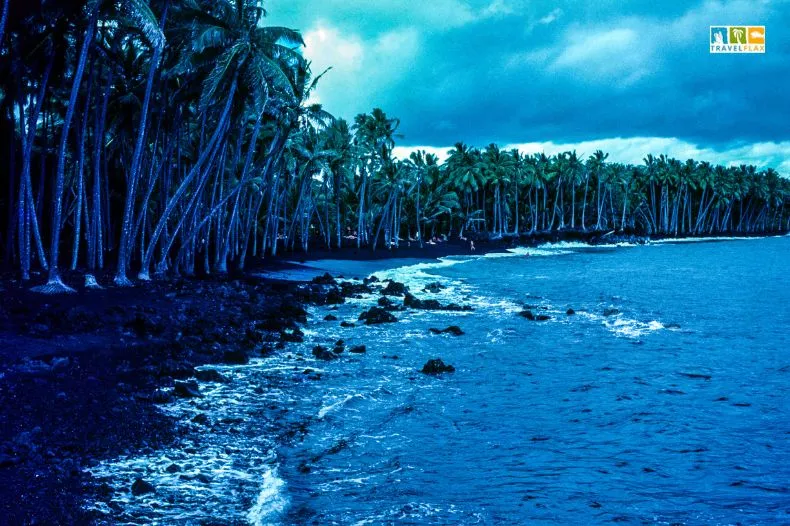
Kaimū Black Sand Beach represents nature’s cycle of destruction and renewal. The original Kaimu Beach and the village of Kalapana were completely buried under 70 feet of lava during the 1990 eruption of Pu’u’ō’ō, part of the Kilauea volcano system.
This devastating lava flow destroyed hundreds of homes but eventually created new land extending into the bay.
The current beach formed gradually as ocean waves ground down lava boulders and pellets into coarse black sand. Massive sea cliffs now define the coastline where the beach once stood.
Over the decades since the eruption, vegetation has returned to the barren lava fields, with coconut palms, ferns, and other plants establishing themselves in the volcanic soil.
The beach is located in Puna on the east coast, accessible via Highway 137 or Highway 130. You’ll find a free parking lot, porta-potties, and food stands near the lot. Lifeguards are on duty at this beach.
The contrast between the black lava landscape and emerging greenery makes Kaimū a striking location to witness volcanic geology. The area serves as a reminder of the island’s ongoing formation and the resilience of life in volcanic zones.
Pohoiki Black Sand Beach
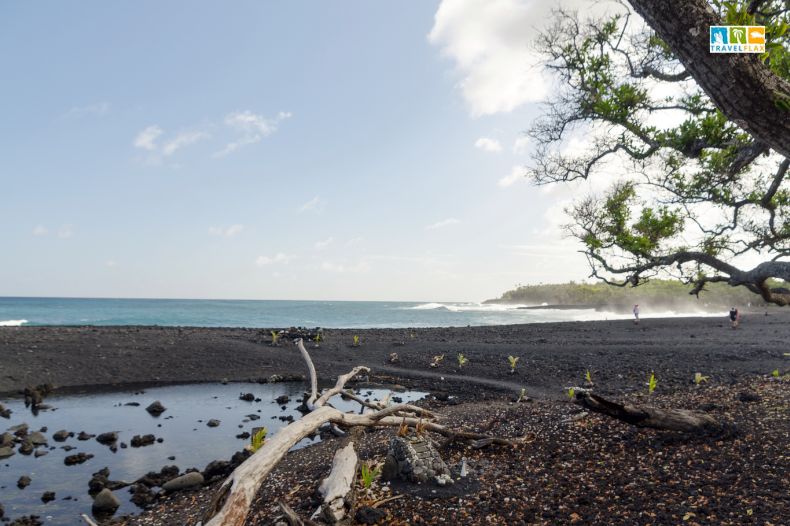
Pohoiki Black Sand Beach is the newest black sand beach on the Big Island, still actively forming from the 2018 eruptions.
Located at Isaac Hale Beach Park in Puna, this beach was created when massive lava flows from fissure 8 in nearby Leilani Estates met the ocean, producing 875 acres of new land.
The explosive contact between molten lava and seawater generated black sand, pellets, and boulders across a long coastal stretch. Parts of the original Isaac Hale Beach Park were buried under lava, while other sections remained intact.
The landscape shows stark contrasts between destruction and regeneration, with new coconut palms and ferns emerging from the otherwise barren volcanic terrain.
Thermal ponds formed from the volcanic activity, including one near the boat ramp that’s easily accessible. However, bacterial activity in these ponds may be high, so enter at your own risk.
The beach offers porta-potties and lifeguard services, with free parking available. Access the area via Highway 130 toward the ocean, then turn left on Highway 137. Located on the far eastern tip of the island, Pohoiki provides a unique opportunity to see one of the world’s youngest beaches.
Richardson Ocean Park
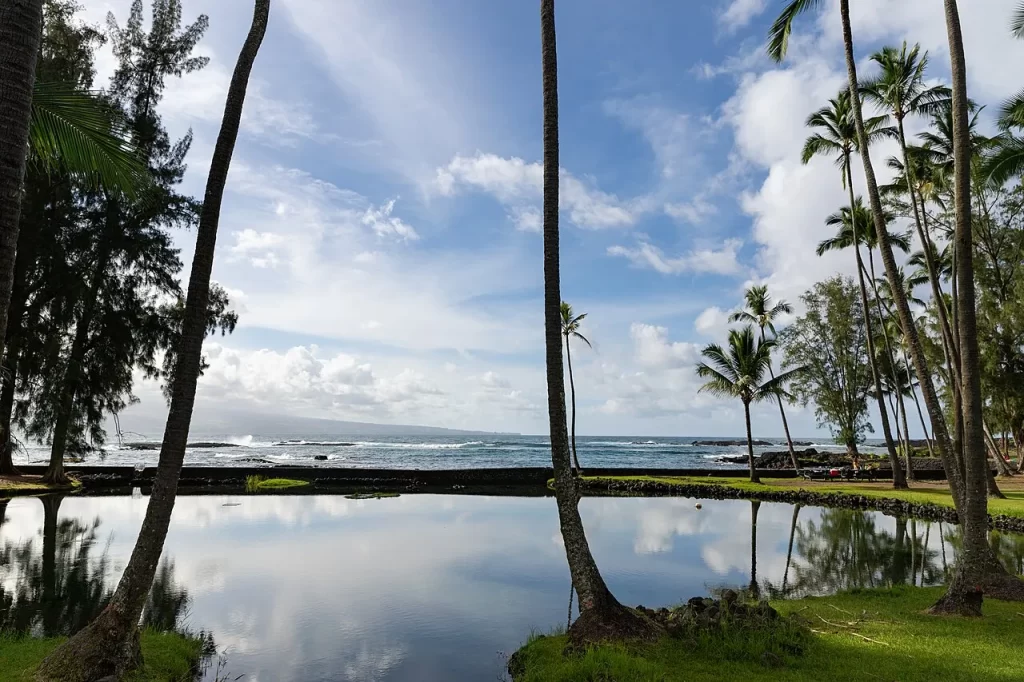
Richardson Ocean Park provides the most convenient black sand beach experience for visitors staying in or near Hilo. Located just off Kalanianaʻole Avenue at 2349 Kalanianaole Ave, Richardson Beach Park sits minutes from downtown Hilo, making it ideal for those with limited time.
The park features a small but distinctive beach with sand that’s a mixture of black volcanic fragments and green olivine crystals.
Much of the shoreline consists of lava boulders, with tidepools and protected areas creating excellent conditions for swimming and snorkeling. The calm, sheltered waters make this a popular spot for families.
Richardson Ocean Park regularly hosts Hawaiian green sea turtles that feed and rest in the area. The marine life viewing opportunities here rival more remote locations. Facilities include lifeguards, restrooms, showers, picnic tables, grassy areas, and freshwater ponds.
The park attracts both locals and visitors, so visiting on weekdays typically provides a less crowded experience. Free parking is available in the public lot.
The combination of amenities, accessibility, and natural features makes Richardson Ocean Park an efficient choice for experiencing black sand without extensive travel.
Notable Black Sand Beaches on Maui
Maui’s black sand beaches originated from volcanic lava flows that cooled rapidly upon contact with ocean water. The island’s eastern and southern coasts feature several distinctive black sand beaches, with Waiʻānapanapa State Park serving as the most visited location.
Waiʻānapanapa State Park
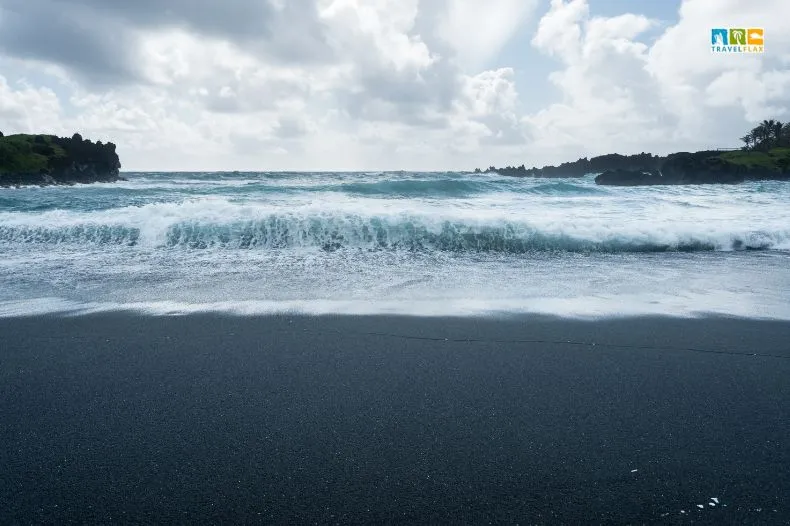
Waiʻānapanapa State Park sits along the Road to Hana on Maui’s eastern coast. The park requires advance reservations for all visitors, and you must present your voucher at entry.
You can book through the official reservation system at gowaianapanapa.com.
The park encompasses more than just the black sand beach. You’ll find volcanic sea caves carved from black lava rock on the right side of the beach.
The Waiʻānapanapa coastal trail begins on the left side and ranks among Maui’s premier hiking experiences.
The beach area features dramatic lava rock formations and native coastal vegetation. Strong currents make swimming dangerous for most visitors, so you should stay on shore unless you’re an experienced swimmer. Most people visit for photography and coastal exploration rather than water activities.
Honokalani Beach
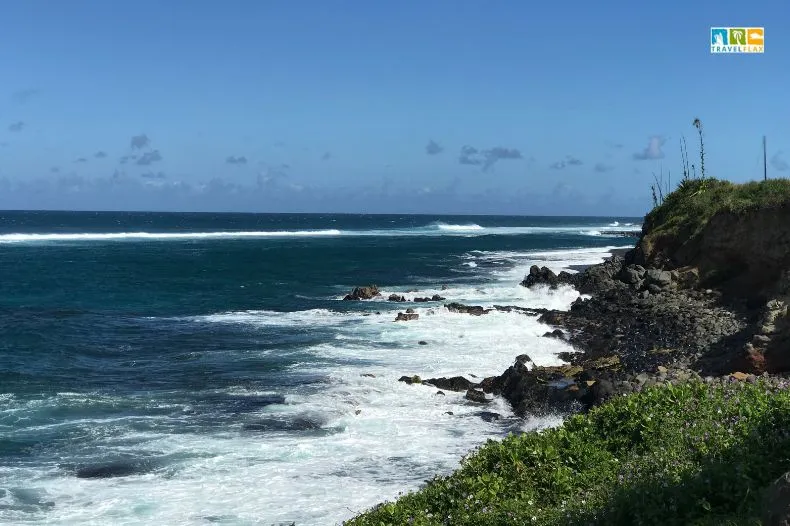
Honokalani Beach, also called Paʻiloa Beach, is the primary black sand beach within Waiʻānapanapa State Park. The beach formed when lava flows from historical eruptions entered the ocean and shattered into fine particles.
Despite its popularity along the Road to Hana, the beach rarely becomes crowded as most visitors stop briefly for photos.
The sand consists of volcanic material mixed with basalt fragments. Black sand absorbs heat more readily than traditional beach sand, so you should wear footwear when walking on the beach during sunny conditions.
The contrast between the dark sand, turquoise water, and green vegetation creates striking visual scenery.
Oneʻuli Beach
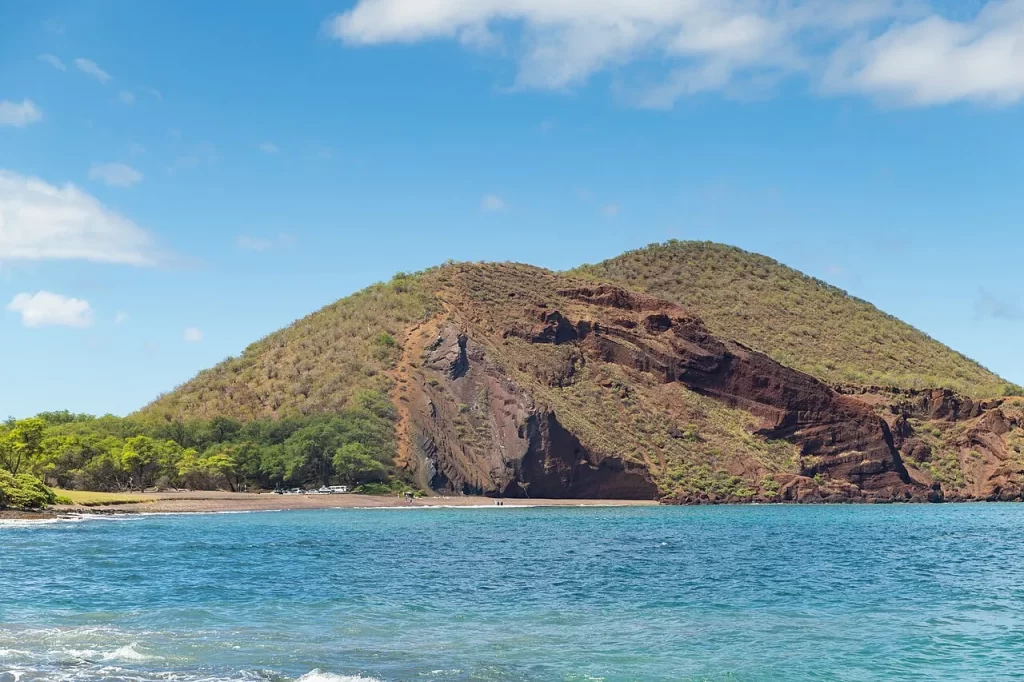
Oneʻuli Beach lies within Makena State Park on Maui’s south shore. The name translates to “dark sands” in Hawaiian.
You’ll reach the beach via a short dirt road that accommodates two-wheel drive vehicles in dry conditions, with parking space for approximately five to six cars.
The beach features thick black sand that transitions to hard lava rock at the waterline. This formation creates excellent snorkeling and diving conditions.
You can regularly spot Green Sea Turtles in the area. The beach offers privacy and solitude compared to more accessible Maui beaches.
A small cinder cone sits at one end of the beach, with lava cliffs bordering the southern edge and Haleakala Volcano providing a mountainous backdrop.
Hidden Gems and Lesser-Known Beaches
Beyond the well-known Punaluʻu and Waiʻānapanapa, Hawaii’s islands harbor secluded black sand beaches that see far fewer visitors.
These remote stretches require more effort to reach but reward you with dramatic volcanic landscapes and authentic Hawaiian beauty.
Kehena Black Sand Beach
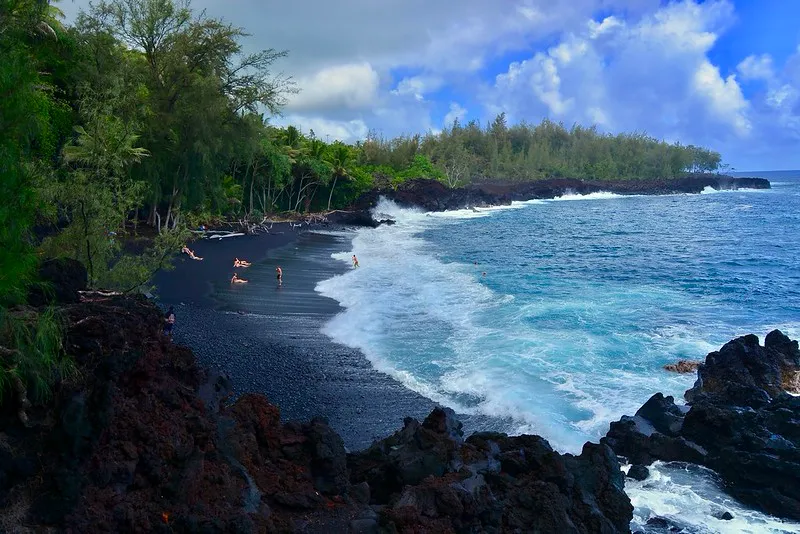
Kehena Black Sand Beach sits along the Big Island’s Puna Coast, accessible only by a steep staircase that descends roughly 100 feet from the highway. This secluded spot formed from lava flows and attracts visitors seeking a more natural, clothing-optional beach experience.
The beach has no facilities or lifeguards, so you’ll need to bring everything you need and exercise caution in the water.
Spinner dolphins frequently visit the bay in the mornings, making early arrivals worthwhile for wildlife viewing. The waves at Kehena Beach can be powerful, and the shore drops off quickly, so swimming is best reserved for calm ocean conditions.
Local residents gather here on Sundays for drum circles, creating a distinctly bohemian atmosphere. Parking is limited to a small dirt pullout on Highway 137, and the unmarked trail requires careful navigation down slippery rocks.
Pololū Valley Black Sand Beach
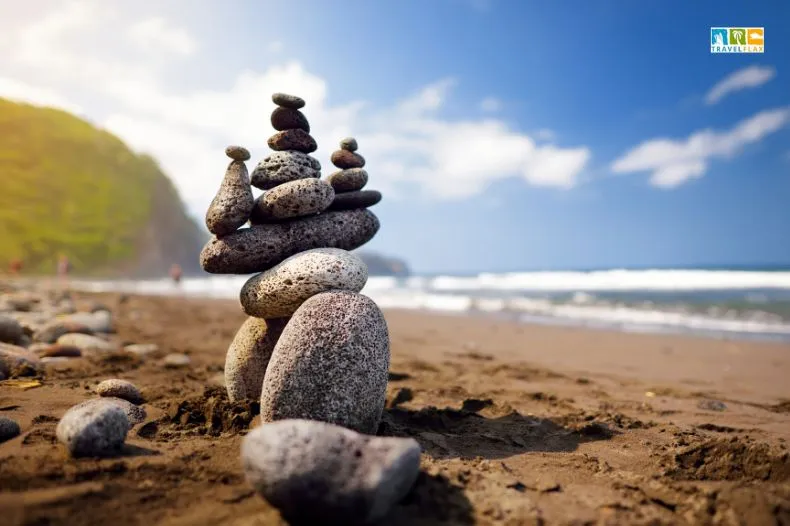
Pololū Valley marks the northern terminus of Highway 270 on the Big Island’s Kohala Coast. The Pololu Trail begins at Pololu Valley Lookout and descends 400 feet over 0.6 miles through switchbacks to reach the isolated black sand beach below.
The hike typically takes 15-20 minutes down and 25-30 minutes back up, with sections that become muddy and slippery after rain.
Pololu Valley Beach stretches wide beneath towering sea cliffs that rise 1,000 feet above the shoreline. Strong currents and dangerous surf make swimming unsafe year-round, but the dramatic scenery makes the trek worthwhile.
You’ll find a freshwater stream where the valley meets the ocean, though the water quality varies. The beach offers complete solitude on most days, with only fellow hikers sharing the space. Bring water, sturdy shoes, and prepare for wind that funnels through the valley.
Waipiʻo Valley Beach
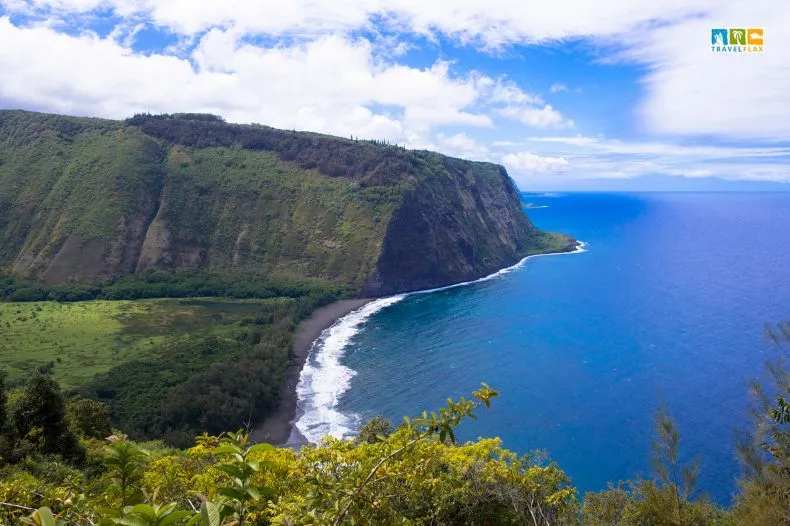
Waipiʻo Valley Beach lies at the base of the “Valley of the Kings,” accessible via an extremely steep road with grades reaching 25%.
The descent requires a 4WD vehicle or booking a guided tour, as the road is too dangerous for standard cars. Hiking down takes roughly 45 minutes, with a strenuous 1-2 hour climb back up.
The beach at Waipio Valley Beach combines black sand with smooth river stones, framed by Waipiʻo Lookout’s vista high above.
Powerful rip currents make swimming dangerous, though the scenery—including waterfalls cascading down the valley walls—justifies the difficult access.
Locals still farm taro in the valley, and the area holds deep cultural significance. You’ll need to ford Waipiʻo Stream to reach the beach, which can be impassable during heavy rain. The beach remains one of the Big Island’s most spectacular and challenging destinations.
49 Black Sand Beach
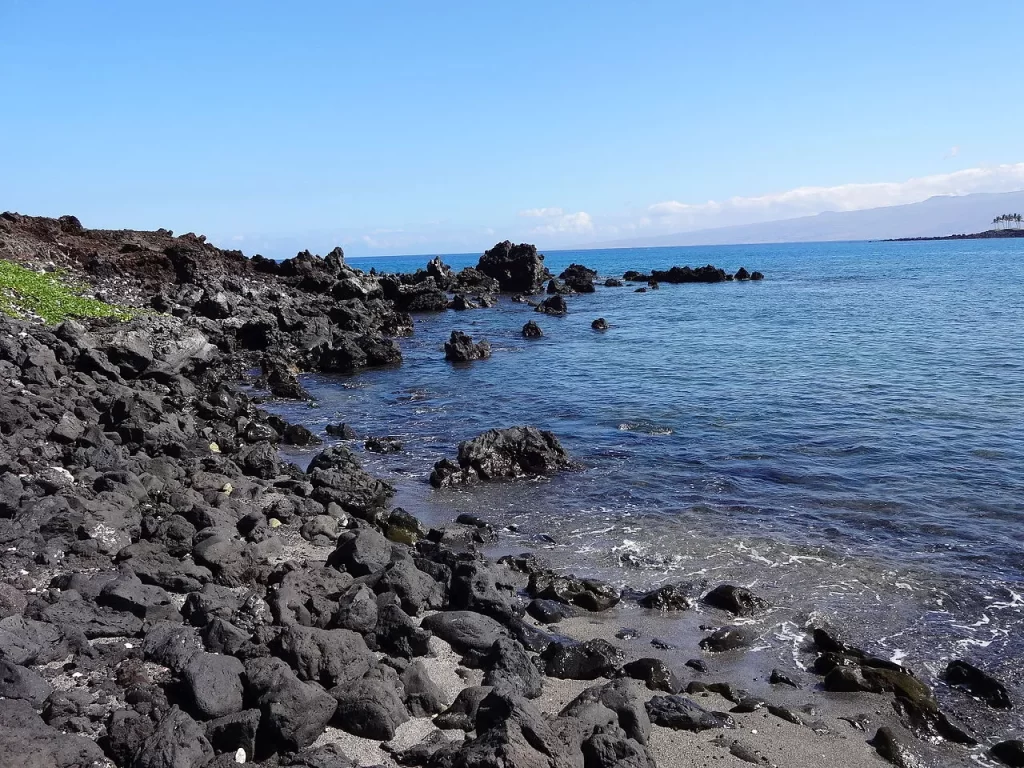
49 Black Sand Beach, locally known as Awahua Beach or Honomalino Beach, sits along South Kona’s remote coastline on the Big Island.
The beach earned its nickname from its location near the 49-mile marker on Highway 11, though you’ll need to take a rough, unsigned access road to reach it. The drive requires high clearance and careful navigation over lava rock terrain.
This hidden gem offers calmer waters than many black sand beaches, with a protected bay that’s suitable for swimming when conditions are right.
The beach features a mix of fine black sand and smooth pebbles, with tide pools forming along the edges during low tide.
Shade from kiawe trees provides relief from the sun, making it comfortable for extended visits. Few tourists discover this location, leaving it primarily to local families and those willing to seek it out. Bring all supplies including water, as no facilities exist nearby.
Conclusion
Black sand beaches in Hawaii offer some of the most unique coastal experiences you’ll find anywhere in the world.
From the family-friendly shores of Punaluʻu where Hawaiian green sea turtles bask on volcanic sand, to the remote valleys of Waipiʻo and Pololū where dramatic cliffs tower above secluded beaches, each location tells the story of Hawaii’s volcanic origins.
The Big Island provides the greatest variety of black sand beaches thanks to its ongoing volcanic activity, with options ranging from easily accessible spots like Richardson Ocean Park in Hilo to newly formed beaches like Pohoiki that are still taking shape.
Maui’s Waiʻānapanapa State Park offers an unforgettable black sand experience along the Road to Hana, though you’ll need to secure reservations in advance.
Whether you’re watching lava-formed coastlines at Kaimū or discovering hidden gems like 49 Black Sand Beach, these volcanic shores showcase nature’s raw power and constant transformation.
Remember that black sand beaches in Hawaii require different precautions than typical beach destinations. The sand heats up quickly under the sun, strong currents often make swimming dangerous, and many beaches lack facilities or lifeguard services.
Always check ocean conditions before entering the water, maintain proper distance from sea turtles and other wildlife, and pack essentials like water, reef-safe sunscreen, and sturdy footwear.
With proper planning and respect for these dynamic volcanic environments, your visit to Hawaii’s black sand beaches will provide memories and photographs unlike any other beach destination on Earth.
Frequently Asked Questions
Are black sand beaches safe to swim in?
Swimming safety at black sand beaches varies greatly by location. Beaches like Punaluʻu and Richardson Ocean Park often have calmer, more protected waters that may be suitable for swimming when conditions are favorable.
However, others—including Kehena, Waipiʻo Valley, and Pololū Valley—are dangerous year-round due to strong surf, rip currents, and sudden drop-offs.
Always check ocean conditions before entering the water and choose beaches with lifeguards when possible. Never turn your back on the waves, as volcanic beaches often lack barrier reefs, making wave activity unpredictable and powerful.
Why does black sand get so hot?
Black sand absorbs significantly more heat than white sand due to its dark color and volcanic composition. The basalt particles that make up black sand retain solar radiation rather than reflecting it, causing surface temperatures to reach levels that can burn bare feet within minutes on sunny days.
Always bring sandals or water shoes when visiting black sand beaches, especially during midday hours. The sand near the waterline stays cooler, and shaded areas under palm trees or rock formations provide relief from the hot surface temperatures.
Can you take black sand from Hawaii beaches?
No, removing black sand, rocks, or any natural materials from Hawaiian beaches is illegal and culturally disrespectful. Hawaii state law prohibits taking sand from beaches, with fines up to $100,000 for violations.
Beyond legal consequences, Native Hawaiian beliefs hold that removing natural elements from the islands brings bad luck. The volcanic sand also erodes faster than traditional beach sand, making conservation critical for preserving these unique geological features.
Many visitors who take sand home later mail it back after experiencing misfortune, with packages arriving regularly at Hawaii Volcanoes National Park and other locations.
What should I bring to a black sand beach?
Essential items for visiting black sand beaches include water shoes or sandals to protect your feet from hot sand and sharp lava rocks, reef-safe sunscreen, plenty of drinking water, snacks, and a towel or beach mat.
Bring snorkeling gear if visiting beaches like Richardson Ocean Park or Oneʻuli Beach where conditions permit. A camera or smartphone is essential for capturing the dramatic scenery.
For remote beaches like Pololū Valley or 49 Black Sand Beach, pack everything you’ll need since facilities don’t exist. Consider bringing a small first-aid kit, as lava rock can cause cuts and scrapes.
When is the best time to visit black sand beaches in Hawaii?
Early morning offers the best experience at black sand beaches for several reasons. The sand remains cooler before the sun heats it to uncomfortable temperatures, beaches are less crowded, and you’ll have better opportunities to see sea turtles coming ashore or dolphins visiting bays like Kehena.
Ocean conditions are typically calmer in the morning, and lighting is ideal for photography before harsh midday sun creates strong contrasts.
Visiting on weekdays rather than weekends also means fewer crowds, especially at popular locations like Punaluʻu and Waiʻānapanapa State Park.
Do I need reservations for black sand beaches?
Waiʻānapanapa State Park on Maui requires advance reservations for all visitors, which you must book through gowaianapanapa.com and present upon entry.
Most other black sand beaches including Punaluʻu, Pohoiki, Richardson Ocean Park, and Kaimū don’t require reservations and offer free parking on a first-come, first-served basis.
However, parking can fill up quickly at popular beaches during peak tourist seasons and weekends. Arriving early ensures you’ll find parking and have the best beach experience before crowds arrive.
Are there black sand beaches on Oahu or Kauai?
Oahu has no black sand beaches because the island formed millions of years ago, and erosion removed the volcanic material over time.
The island’s last volcanic activity occurred roughly 100,000 years ago, and without recent lava flows to create new black sand, natural processes converted the shoreline to white and tan coral-based beaches.
Kauai, also an older island, similarly lacks black sand beaches for the same geological reasons. The Big Island and Maui have the best black sand beaches due to their more recent volcanic activity, with the Big Island offering the most options thanks to ongoing eruptions from Kīlauea volcano.
Is it better to visit black sand beaches on the Big Island or Maui?
The Big Island offers the best overall experience for black sand beach enthusiasts, with the most beaches, greatest variety, and dramatic volcanic landscapes.
You’ll find everything from accessible beaches like Punaluʻu to remote valleys like Waipiʻo and newly formed beaches like Pohoiki. Ongoing volcanic activity means beaches are in different stages of formation, and you can visit several in one day along the eastern and southern coasts.
Maui has fewer black sand beaches but features the iconic Waiʻānapanapa State Park, with great facilities, hiking trails, sea caves, and Honokalani Beach.
It’s an essential stop if you’re driving the Road to Hana. However, if black sand beaches are your main focus, the Big Island offers more options, better wildlife viewing, and a more complete volcanic beach experience—though visiting both islands provides unique perspectives.