
The Great Post-Christmas Airport Apocalypse of 2025
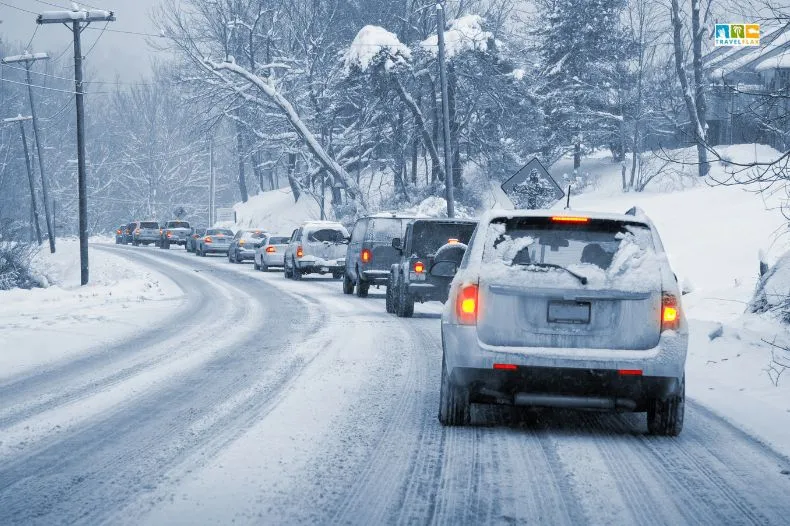
Picture this: It’s 6 a.m. at JFK Terminal 4, the Saturday after Christmas. You’re clutching a lukewarm airport coffee that cost you $8, staring up at the departure board like it’s a slot machine that’s about to pay out.
Except instead of cherries and sevens, you’re watching flight numbers flip from “Delayed” to “Canceled” in real time. A woman next to you bursts into tears.
Her connecting flight to Denver just vanished. Behind you, a family of five is building a pillow fort out of North Face puffer jackets. Welcome to Winter Storm Devin—the uninvited guest who crashed America’s post-holiday travel party and refused to leave.
By Saturday morning, the carnage was undeniable: over 1,800 flights canceled nationwide. Another 6,800-plus delayed. New York’s three major airports—JFK, LaGuardia, and Newark—became ground zero for travel misery.
Four inches of snow blanketed New York City overnight, turning runways into ice rinks and transforming the nation’s busiest airspace into a no-fly zone.
If you were trying to get home after Christmas 2025, chances are you’ve got a Devin survival story. Let me tell you about the storm that made grown adults sleep on baggage carousels.
Meet Devin: The Storm Nobody Saw Coming This Hard
Winter Storm Devin rolled into the Northeast like it owned the place, and honestly? For about 48 hours, it did. Meteorologists had been tracking this system for days, but nobody expected it to hit with quite this much attitude during the busiest post-holiday travel weekend in recorded history.
The storm’s path was textbook devastating: It swept up the Eastern Seaboard, dumping snow from Virginia to Maine. But it saved its worst behavior for the New York metro area.
Four inches might not sound catastrophic if you’re from Buffalo or Minneapolis, but in the world of aviation, four inches at JFK is like throwing a wrench into a Formula One engine. Everything stops.
The problem wasn’t just the snow—it was the timing. Airlines were already running at maximum capacity, trying to get millions of Americans home after Christmas.
Crews were stretched thin. Planes were packed to the ceiling. Then Devin said, “Hold my beer,” and overnight, the entire system seized up like a frozen engine block.
By dawn on Saturday, deicing trucks were racing around tarmacs like Zambonis at Madison Square Garden. But they couldn’t keep up. Planes need clean wings and clear runways.
Devin wasn’t offering either. The FAA issued ground stops. Airlines started canceling flights in waves. And travelers? They were left holding the bag—or more accurately, sleeping on it in Terminal 5.
NYC Airport Hell: A Choose-Your-Own-Disaster Adventure
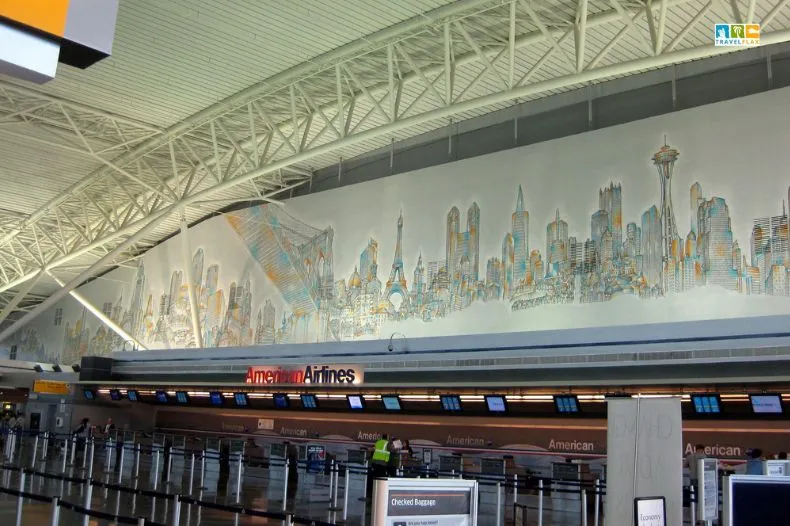
Let’s talk about what “1,800 cancellations” actually looks like at ground level, because statistics don’t capture the chaos.
JFK International became a refugee camp with better Wi-Fi. Every charging station had six people fighting over two outlets. Gate areas designed for 200 passengers held 500.
I’m talking about travelers sprawled across floors, using roller bags as pillows, their eyes glazed with the thousand-yard stare of the truly stranded. One guy told a gate agent he’d been there for 30 hours straight. She replied, “You and everyone else, buddy.”
The rebooking lines? Forget it. We’re talking 90-minute waits just to talk to a human who would essentially shrug and say, “Best I can do is Tuesday.” The airline apps crashed harder than the flight schedules. Customer service phone lines? Ha. You had better odds getting through to Taylor Swift’s personal cell.
LaGuardia, that perpetually renovated airport everyone loves to hate, somehow managed to be even worse. At least JFK has space to be miserable.
LaGuardia’s terminals are compact, which means when 300 flights get delayed and canceled, you’re shoulder-to-shoulder with strangers who haven’t showered since Christmas Eve.
The food courts ran out of everything edible by 10 a.m. One family resorted to sharing a single bag of stale pretzels like it was Thanksgiving dinner.
And then there’s Newark. Poor Newark, the third wheel of NYC airports, handling overflow from both JFK and LaGuardia. United Airlines took the worst beating there—dozens of cancellations rippled out, stranding international passengers who’d just flown in from London, Toronto, and Mexico City.
Imagine: You survive an overnight transatlantic flight only to discover your connection to Kansas City no longer exists and won’t exist for another two days. That’s Devin’s specialty—kicking you when you’re already down.
My favorite made-up-but-totally-believable story? The solo traveler who decided to have a “Home Alone Christmas” in Manhattan, only to get stuck at JFK for 38 hours trying to fly home.
He ended up ordering pizza to his gate and making friends with a TSA agent who snuck him into the crew break room for a nap. Peak New York energy, honestly.
The Ripple Effect: How One Storm Broke America’s Travel Chain
Here’s the thing about the modern airline system: It’s a house of cards built on tight schedules and razor-thin margins. When New York’s airports go down, the entire country feels it.
Families across America spent Saturday frantically texting each other: “Mom’s stuck in Newark.” “Dad won’t make it to the reunion.” “Grandma’s been rerouted through Charlotte but that flight’s delayed too.” The holiday magic evaporated faster than snow in July.
Delta passengers in Atlanta watched their connections vanish. Southwest flyers in Chicago played the rebooking lottery. American Airlines hubs in Dallas and Charlotte became overflow parking lots for displaced travelers.
One couple trying to get from Boston to San Diego ended up spending 18 hours in three different airports and still didn’t make it. They gave up and rented a car in Philadelphia. Drove straight through. Arrived two days late to their own New Year’s plans.
And let’s not forget the people who never even made it to the airport. Thousands of travelers checked the cancellation notices from their couches, canceled their Ubers, and just… stayed home. Smart move, honestly. Sometimes the best travel decision is not to travel at all.
The financial hit? Hotels near NYC airports jacked up prices to $400 a night for rooms that usually go for $150. Rental car agencies ran out of vehicles.
Amtrak tickets sold out. Devin didn’t just cancel flights—it canceled plans, ruined reunions, and turned post-Christmas joy into logistical nightmares.
Pro Tips: How to Survive the Next Storm Devin
Let me hit you with some hard-earned wisdom for next time Mother Nature decides to throw hands:
Before you fly:
- Download ALL the apps. FlightAware, airline apps, airport apps. Knowledge is power when flights start dropping.
- Get travel insurance. Seriously. The $40 you spend could save you $800 in hotel costs and rebooking fees. “Trip interruption” coverage is your friend.
- Book morning flights. They’re less likely to get caught in cascade delays. Plus, if they cancel, you have all day to find alternatives.
- Know your airline’s rebooking policies. Can you rebook yourself online? Do you need to call? Some airlines let you change flights for free during weather events—know the rules.
When chaos hits:
- Use the app, not the phone line. Most airlines let you rebook online. Skip the 3-hour hold time. Head to the gate anyway.
- Even if your flight’s canceled, gate agents have more power than customer service reps. They might squeeze you onto another flight.
- Be nice to airline staff. They didn’t create the storm. They’re dealing with 500 angry people. Kindness gets you further than yelling.
- Have a backup plan. Amtrak. Rental cars. Bus lines. Even a friend with a spare couch. Flexibility is everything.
Silver Linings in the Snow
Look, I know being stranded sucks. But some travelers made lemonade out of Devin’s lemons.
One group of strangers stuck at LaGuardia for 20 hours organized an impromptu karaoke session using someone’s Bluetooth speaker.
They’re probably Facebook friends now. Another family decided to extend their New York stay, scored last-minute Broadway tickets, and called it a bonus vacation day. Kids built snowmen in Central Park instead of sitting on a tarmac for five hours.
And honestly? Sometimes a forced snow day is the universe telling you to slow down. Order takeout. Watch movies in your pajamas. Let the storm rage outside while you’re cozy inside. Not every disruption is a disaster. Some are just detours.
Clear Skies Ahead (Eventually)
Winter Storm Devin eventually moved on, as storms do. By Sunday, airlines were scrambling to recover. Extra crews were called in. Planes repositioned. The chaos began to untangle, flight by flight.
If you got caught in Devin’s web, you have my deepest sympathy—and probably a hell of a story. If you’re planning travel in the coming weeks, learn from December 28, 2025. Check the weather. Build in buffer time. Pack snacks, phone chargers, and patience in equal measure.
And hey, if you survived Storm Devin, drop your tale in the comments. Did you sleep at JFK? Get rerouted through five cities? Make new friends in the baggage claim? We want to hear it. Because misery loves company, but so does good storytelling.
Safe travels out there, friends. May your flights be on time and your airports mercifully boring.
Frequently Asked Questions
What is a winter storm?
A winter storm is a weather event that brings a combination of snow, ice, sleet, freezing rain, and dangerously cold temperatures. These systems can range from mild snow showers to severe blizzards that shut down entire regions.
Winter storms are named by The Weather Channel when they’re expected to produce significant impacts—like our friend Devin, who decided NYC needed a post-Christmas wake-up call.
They typically form when cold Arctic air collides with warmer, moisture-laden air from the south, creating the perfect recipe for travel chaos.
What is a blizzard warning?
A blizzard warning is the National Weather Service’s way of saying “seriously, don’t go outside.” It’s issued when sustained winds or frequent gusts of 35+ mph combine with considerable falling or blowing snow to create life-threatening whiteout conditions for at least three hours.
This isn’t just about snow totals—it’s about visibility dropping to near zero and wind chills plummeting to dangerous levels.
When you see a blizzard warning, airlines start preemptively canceling flights because it’s not safe to operate. If Storm Devin had escalated to blizzard conditions, we’d have seen even worse than 1,800 cancellations.
How much snow is in Central Park?
As of Storm Devin’s Saturday morning aftermath, Central Park received approximately 4 inches of snow overnight. While that might not sound like a snow-pocalypse to folks in Minnesota, it was enough to turn NYC’s three major airports into frozen parking lots.
Central Park serves as the official measurement point for Manhattan snowfall, and those 4 inches came down fast enough and during peak travel hours to create maximum disruption.
Fun fact: Central Park’s biggest single snowfall was 26.9 inches during the February 2006 blizzard—now THAT was chaos.
What’s the worst blizzard in history?
That depends on how you measure “worst,” but here are the legendary contenders:
The Snow Winter of 1880-1881 (aka “The Hard Winter” or “Long Winter”) might be the most brutal American winter season ever recorded. The Hard Winter began on October 15, 1880, with a blizzard in eastern South Dakota and lasted until April 1881.
Heavy precipitation throughout the winter resulted in an accumulation of more than eleven feet of snow in many communities, and snow fell on 47 of 59 days between January and February 1881.
Trains couldn’t run for months—some towns in Dakota Territory were completely cut off from supplies from January until May. People burned their furniture and twisted hay into sticks to stay warm.
Laura Ingalls Wilder documented this winter in her book The Long Winter, and her account has been verified by meteorological records as shockingly accurate. For cities like Omaha and Des Moines, it remains the coldest, snowiest winter on record.
The Great Blizzard of 1888 (aka “The Great White Hurricane”) dumped up to 55 inches of snow on the Northeast, killed over 400 people, and paralyzed New York City for days. Snowdrifts reached second-story windows. It’s still the benchmark for East Coast winter disasters.
The Iran Blizzard of 1972 holds the grim record for deadliest blizzard ever—it killed approximately 4,000 people when 10-26 feet of snow buried entire villages in rural Iran over a week-long period.
The Storm of the Century (1993) hit the entire Eastern Seaboard from Cuba to Canada, affecting over 100 million people, causing $6 billion in damage, and claiming 318 lives. It shut down every major airport on the East Coast.