
Airline IT outages are causing severe disruptions for travelers across the globe, leaving airports in chaos and passengers searching for answers. In July 2025, a wave of technical failures hit major airlines such as American, United, JetBlue, Alaska Airlines, and Qantas.
These large-scale outages, combined with extreme weather in Europe and Asia, have produced a perfect storm of travel problems.
Understanding the causes and effects of these airline IT outages helps travelers prepare and adapt during these challenging times.
The Surge in Airline IT Outages
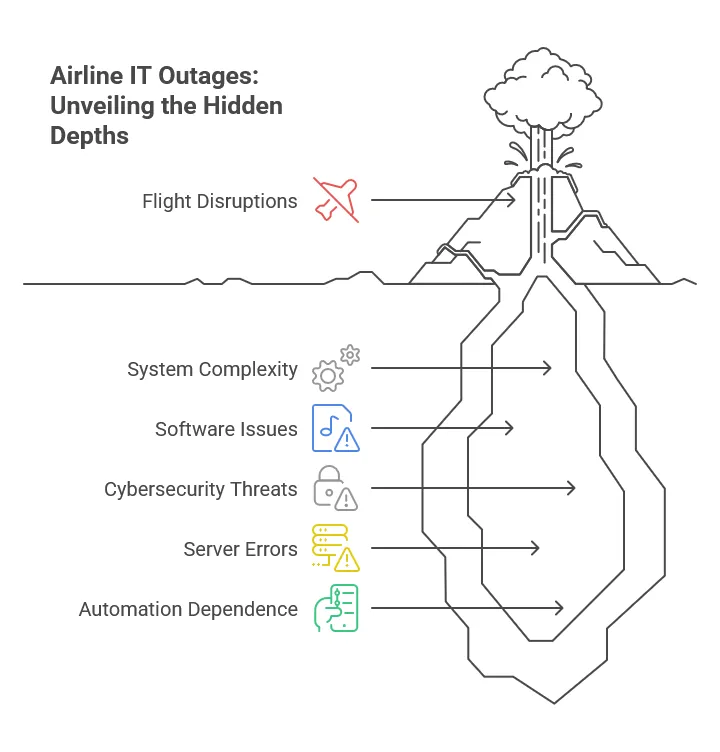
In recent years, airline IT systems have become more complex and interconnected. With increased dependence on technology for operations and customer service, the risk of major breakdowns has grown.
July 2025 saw several large airlines struggle with system-wide IT outages.
Reservation, check-in, booking, and baggage systems all broke down, causing flight delays, missed connections, and even lost luggage for millions of passengers.
Airline IT outages can start for many reasons, including software updates gone wrong, cybersecurity threats, or simple server errors.
As airlines adopt more automation and online services, the impact of even a short outage multiplies fast and is felt worldwide.
Global Impact on Air Travel
The scale of these airline IT outages is unprecedented. Travelers in the US, Europe, and Asia reported long delays, extended waiting times for customer support, and confusion at departure gates.
Entire airport terminals faced gridlock as manual check-in systems faltered under pressure.
Flights at busy hubs like London Heathrow, Paris Charles de Gaulle, Amsterdam Schiphol, and Beijing Capital International were grounded or rerouted, leaving thousands stranded.
Flight cancellations led to airport backlogs, with families and business travelers forced to sleep on terminal floors or scramble for alternate transit options.
Lost baggage became common, with tracking systems offline or unreliable. The current crisis highlighted how fragile airline technical systems can be, and how dependent modern travel is on smooth-running digital operations.
Secondary Factors: Extreme Weather
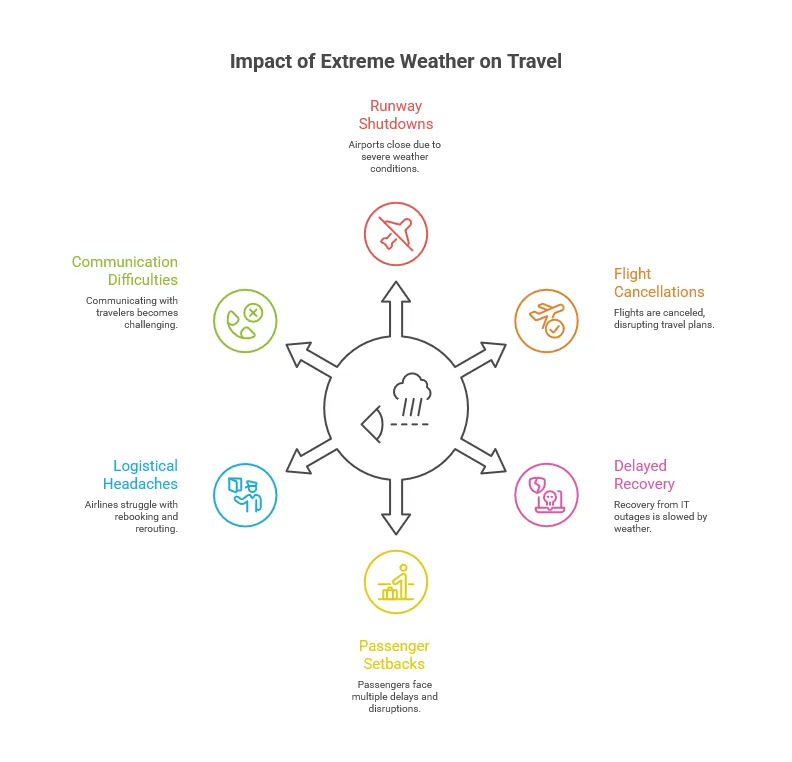
Adding to the chaos, severe storms and typhoons swept across Northern Europe and East Asia. These weather events shut down runways, caused more flight cancellations, and delayed recovery efforts from the earlier IT outages.
In several cases, passengers faced double setbacks: first from delayed flights due to technology failure, then from weather grounding the remaining flights.
For airlines, combining IT outages with extreme weather creates massive logistical headaches. Staff must juggle rebooking and rerouting passengers, often without access to full online databases.
Communication with travelers becomes difficult, leading to more uncertainty and anxiety.
Why Are Airlines So Vulnerable?
Airlines operate on thin profit margins and require vast networks of interconnected systems. Each part—reservations, crew scheduling, baggage tracking—is vital to the whole.
A breakdown in one part can cascade to others, making IT management a top priority. However, many systems still run on older software with limited backup or redundancy.
Cyberattacks are also an increasing concern. Industry experts warn that airlines are being targeted more often by hackers seeking to exploit system weaknesses for profit or disruption. Even a minor security flaw can have consequences affecting millions.
What Travelers Can Do
While travelers cannot prevent airline IT outages or storms, there are steps to reduce disruption:
- Check Flight Status Regularly: Use airline websites, apps, and social media for live updates before heading to the airport.
- Keep Booking Information Handy: Save e-tickets, confirmation numbers, and identification offline.
- Arrive Early: Be prepared for slow check-in and security; extra time reduces stress.
- Travel Insurance: Get coverage for delays, cancellations, and lost baggage caused by IT failures.
- Pack Essentials: Keep medications, chargers, and basic items in carry-on bags for emergencies.
How Airlines Are Responding
Airlines are quickly investing in upgraded IT infrastructure and disaster recovery plans. Some now offer real-time flight alerts and self-service kiosks, freeing staff to handle more complex issues.
Customer service teams are expanding, and more companies are adopting cloud-based systems for better backup and security.
The industry is also pushing for stronger cybersecurity standards and improved communication between airlines, airports, and government agencies.
These measures aim to prevent widespread IT outages and build trust with travelers.
Looking Ahead: The New Normal?
Airline IT outages may become more common as travel grows and technology gets more complicated. Both travelers and airlines must be ready to adapt. For passengers, flexibility and preparation are vital.
For airlines, investing in resilient systems and clear communication will shape the future of air travel.
By staying aware and planning ahead, travelers can make the best of a tough situation and continue exploring the world—even when technology fails.